
Last updated November 16, 2026
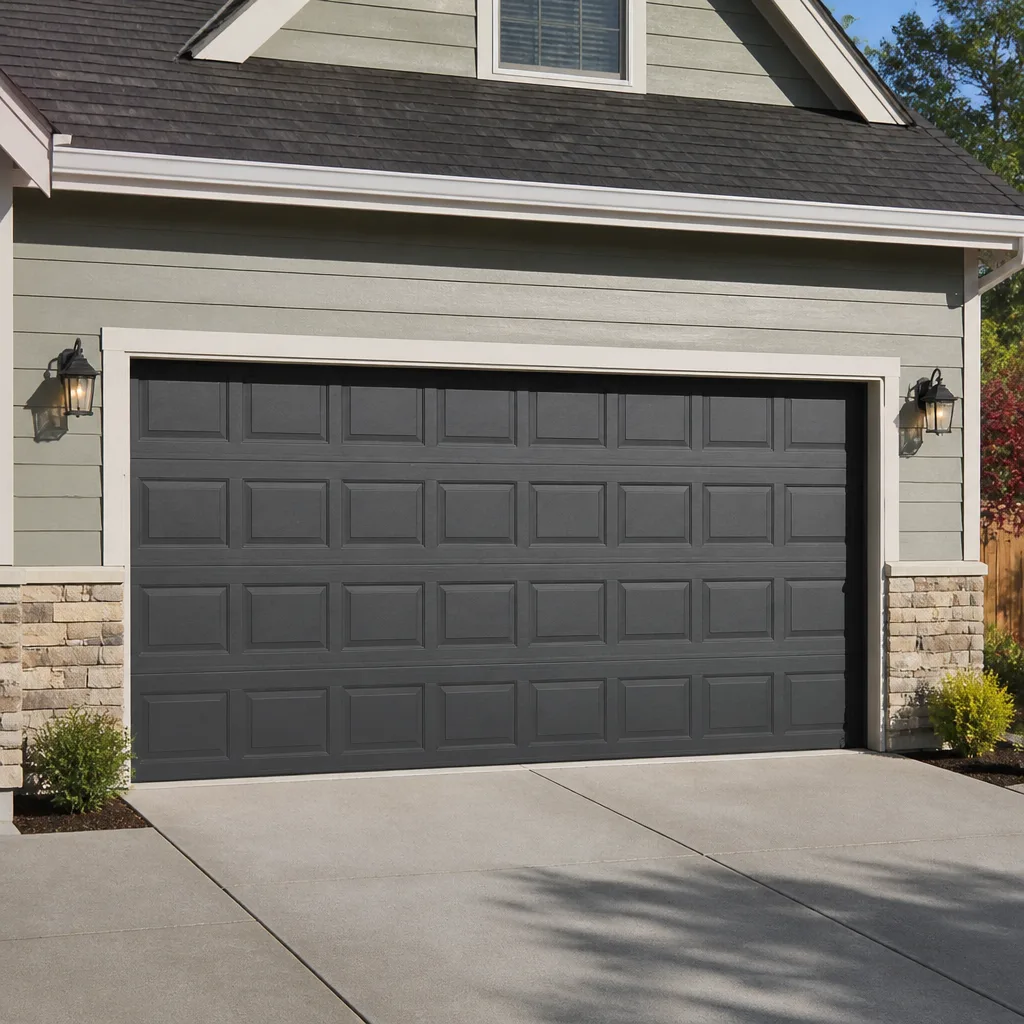 Raised-panel steel
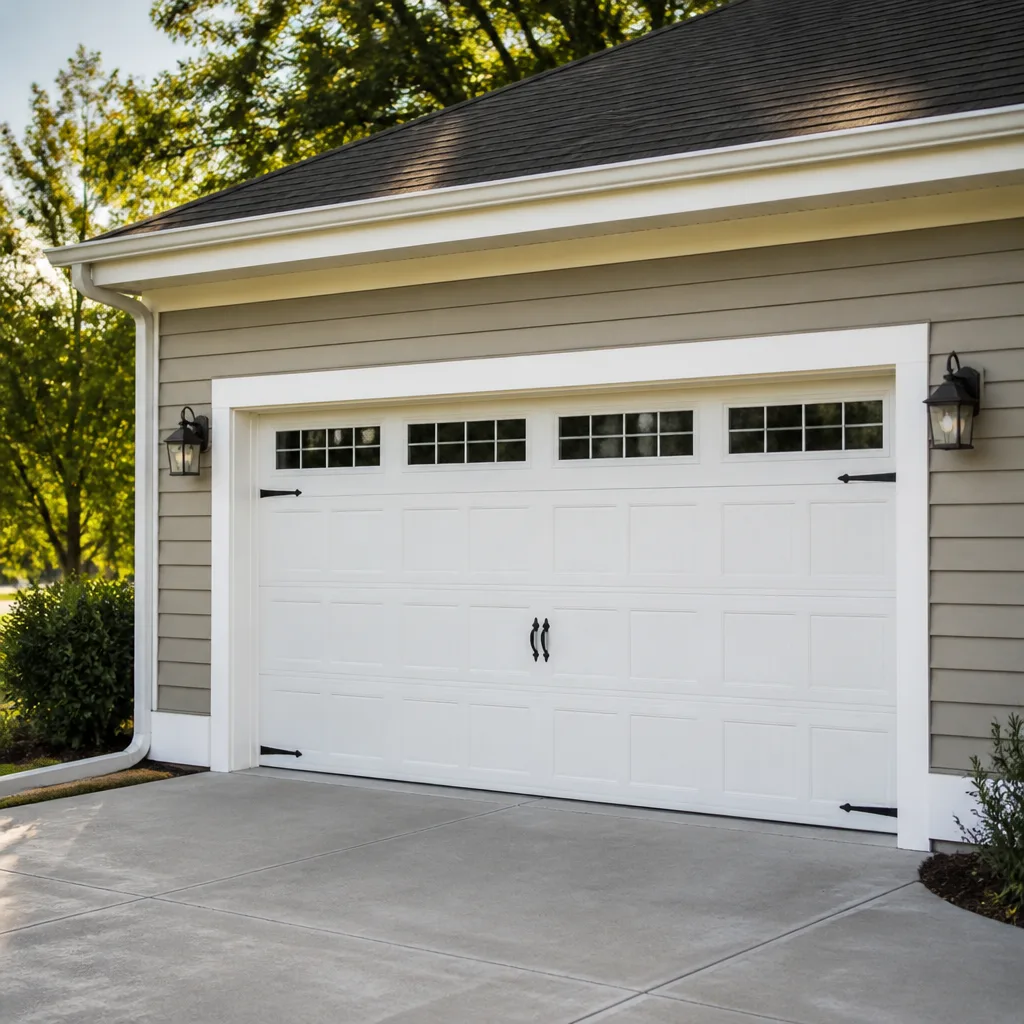
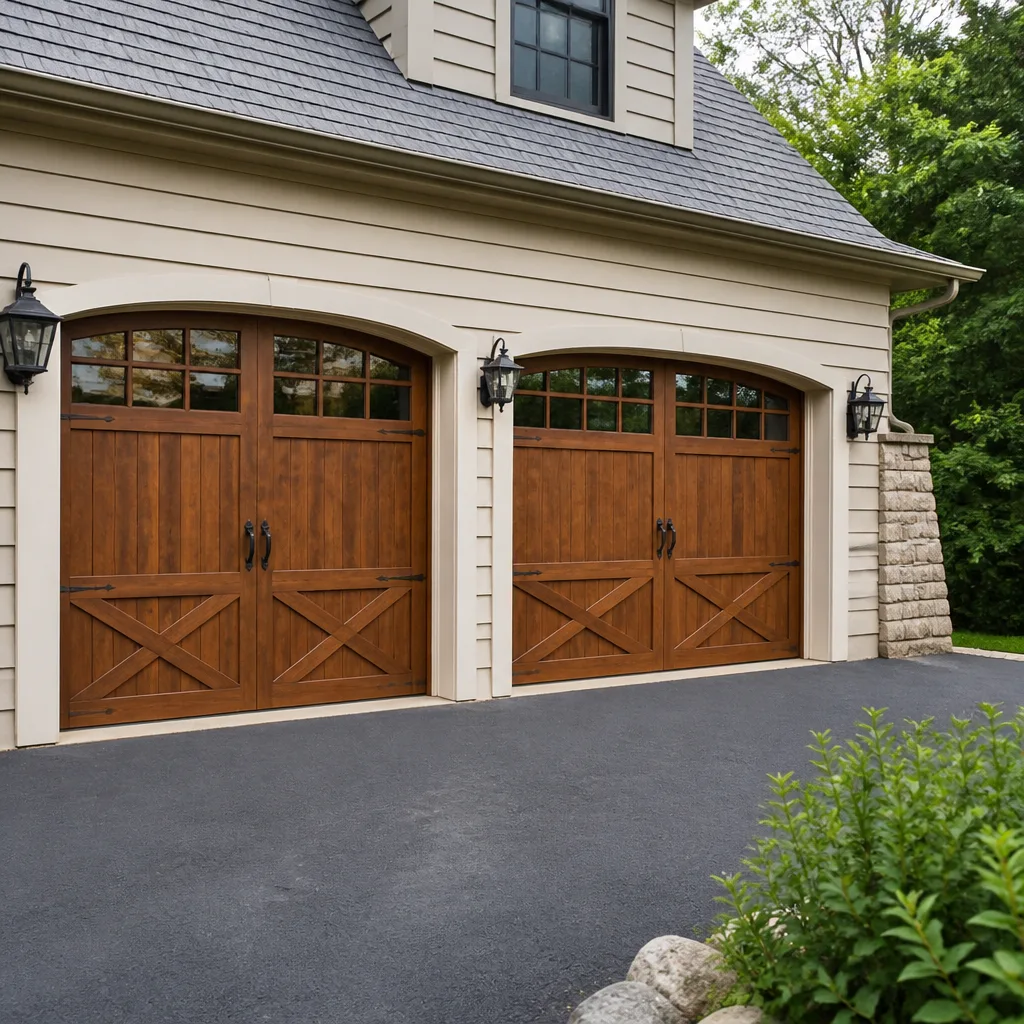 Carriage house
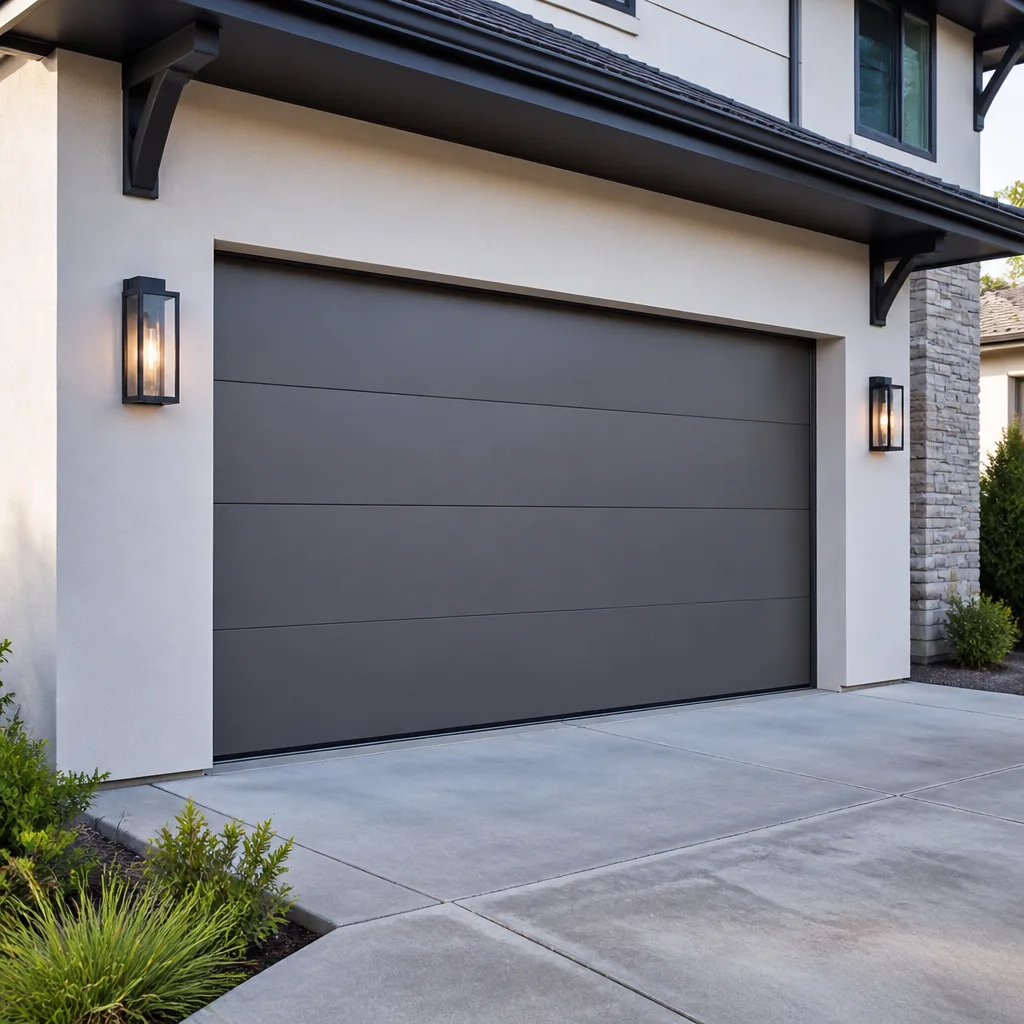 Modern flush
 Full-view glass
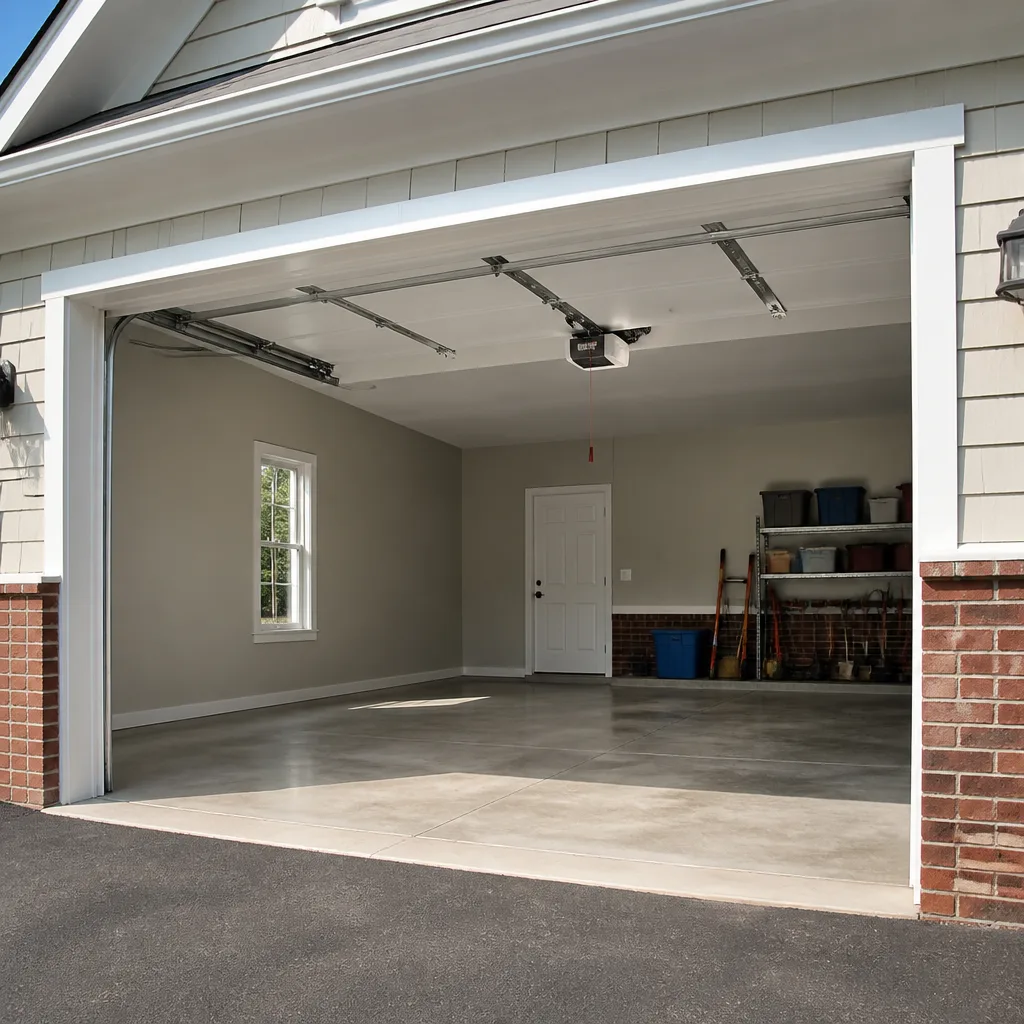 LiftMaster openers
 Chamberlain openers
Full 25-point door and opener safety check with every visit - springs, cables, rollers, tracks, and your LiftMaster or Chamberlain opener included
You get a price before we start. It does not change when the pro arrives.
Get your free estimateDIY vs Professional Garage Door: The Nashville Homeowner’s Decision Guide
Replacing a torsion spring yourself isn’t difficult in the same way that defusing a smoke detector is not difficult – the problem is the one time it goes wrong, it goes wrong fast and badly. The same tutorial that worked smoothly a hundred times before isn’t a guarantee, and emergency rooms see garage door spring injuries every year from homeowners who did everything right until the one moment they didn’t. The real DIY versus professional question for garage doors isn’t about skill level at all. It’s about which specific tasks carry a risk profile that makes professional work the correct economic choice regardless of what you’re capable of. In this guide, we’ll walk through Nashville garage door work task by task, separating what a capable homeowner can safely handle from what should never be attempted, and explain why the difference matters.
Quick Answer
Most garage door maintenance – lubrication, weatherstripping, sensor alignment, keypad programming – is safe and reasonable for a capable homeowner to do. Torsion spring work, cable replacement, and track realignment after a major impact are not, because the risk comes from stored mechanical energy, not from skill gaps. For anything involving springs, cables, or a door that’s come off its tracks, call a professional.
Styles & brands we work with
- Raised-panel steel
- Carriage house
- Modern flush
- Full-view glass
- LiftMaster openers
- Chamberlain openers
Table of Contents
- Why the DIY vs Professional Question Is About Risk, Not Skill
- The Jobs You Can Safely Do Yourself
- Torsion Springs: Why This Category Is Different
- The Hidden Cost of a DIY Mistake in Nashville
- When DIY Compounds a Problem on a Used or Unknown-History Door
- Opener Problems: Repair vs Replace
- How Nashville’s Climate Affects Your Door
- When to Call a Professional
- Frequently Asked Questions
Why the DIY vs Professional Question Is About Risk, Not Skill
The standard advice you’ll find online is “always call a professional” or “you can do it yourself with the right tools.” Both miss the point. The right answer depends entirely on which task you’re looking at, and the tasks divide cleanly into three categories based on what can go wrong.
Category 1: Low risk, reasonable DIY. These are maintenance tasks where a mistake costs you time or a small part replacement – not an injury. Lubrication, weatherstripping, sensor alignment, and keypad programming all fit here. If you’re comfortable on a step ladder and can follow written instructions, these are yours.
Category 2: Moderate risk, assessment needed. These are tasks where a mistake could damage the door or opener but is unlikely to hurt you. Replacing a garage door opener’s battery backup, adjusting travel limits on a LiftMaster or Chamberlain unit, or replacing a bent hinge fall here. A capable homeowner with patience can handle most of these, but only after confirming the specific model’s procedure.
Category 3: High risk, professional only. These are tasks where the danger isn’t about whether you’re careful. It’s about the physics of the system. Torsion spring replacement, cable replacement, and any work that requires releasing tension from the door’s counterbalance system belong in this category. A mistake here can cause serious injury in under a second.
The useful question isn’t “Am I handy enough?” It’s “If this goes wrong, what’s the worst outcome?” When the worst outcome is a broken part, DIY is reasonable. When the worst outcome is a hospital visit, it isn’t. That distinction is what should drive every decision about your garage door in Nashville.
The Jobs You Can Safely Do Yourself
Here’s what a capable homeowner can handle without special tools or training. We’ve walked Nashville homeowners through all of these over the phone, and none of them require a service call if you’re willing to spend twenty minutes on a step ladder.
Lubrication
Garage doors have several moving parts that benefit from periodic lubrication: hinges, rollers, and the torsion spring coils (a light spray only – never remove the spring). Use a garage-door-specific lubricant, not WD-40, which attracts dirt. Apply twice a year, more often if your door gets heavy daily use. This is the single highest-value maintenance task you can do yourself, and it takes less time than brewing coffee.
Weatherstripping Replacement
The rubber seal along the bottom of the door and the weatherstripping around the frame both degrade over time. Nashville’s summer humidity and winter temperature swings speed this up. Replacing bottom seal weatherstripping is a straightforward task: measure the width of the door, order a matching seal, pull the old one out of its track, and slide the new one in. No tools beyond a utility knife and possibly a pair of pliers.
Sensor Alignment
If your door reverses immediately after starting to close, the safety sensors near the floor are likely misaligned or blocked. Check that both sensor lights are on and steady (not blinking). Wipe the lenses clean with a dry cloth. If one light is off, check the wiring connection and try nudging the sensor bracket until the light comes on. This solves a surprising share of “my door won’t close” calls.
Keypad Programming
Adding or changing a code on your garage door keypad is a five-minute job and the instructions are specific to your opener’s brand. LiftMaster, Chamberlain, Genie, and most other brands use a “learn” button on the opener motor head. Press it, enter your code on the keypad within the time window, and you’re done. The exact sequence varies by model, so check the manual or search your model number.
Visual Inspection
Once a month, look at the door’s hardware. Check for frayed cables (don’t touch them – just look), bent hinges, worn rollers, or loose bolts. Catching these early is the difference between a cheap repair and an expensive one. It’s also the best way to spot a problem before it strands your car inside.
Torsion Springs: Why This Category Is Different
A torsion spring holds the entire weight of your garage door in tension. A typical double-car door weighs between 150 and 250 pounds, and the spring is what makes that weight feel like five pounds when you lift the door manually. That stored energy doesn’t go away when the door is closed – it’s still there, wound tight, waiting.
When a torsion spring breaks during normal use, it releases that energy instantly. That’s why you hear a loud bang when a spring fails – the energy has to go somewhere. When a spring breaks while someone is winding or unwinding it with a pair of steel rods, the rods can fly out of the spring with enough force to break bones or cause serious injury. The task isn’t dangerous because it’s difficult. It’s dangerous because the system stores energy in a way that doesn’t care how careful you are.
This is the category where DIY crosses from “reasonable risk” into something else entirely. The wind-up process requires two winding rods, an understanding of how many quarter-turns the spring needs based on the door’s height and weight, and a physical position that puts your hands and face directly in the release path. There’s no YouTube tutorial that makes that safer. The skill of the person holding the rods doesn’t change the physics.
For the same reason, cable replacement on a torsion-spring door is also professional work. The cables are under the same tension as the springs, and a snapped cable can whip across the garage with significant force.
The Parts You Should Never Touch
- Torsion springs – stored energy, professional only
- Extension springs – also under tension, same risk profile
- Lift cables – carry the door’s weight, snap risk
- Bottom brackets – under cable tension, dangerous to loosen
- Any work requiring the door to be in a “relaxed” position – that position only exists after the tension is released
If you’re not sure whether a task involves stored tension, treat it as Category 3 until proven otherwise. That’s not caution for its own sake – it’s how the system actually works.
The Hidden Cost of a DIY Mistake in Nashville
When a DIY repair goes wrong, the visible cost is the repair bill. The real cost includes several things that don’t show up on the first invoice.
The second repair. A homeowner who replaces a torsion spring incorrectly and ends up with a door that won’t close has now created a situation that requires more than a spring replacement. Bent tracks, damaged panels, and worn opener gears often follow a bad spring job. The bill for correcting the first attempt is usually higher than the original professional repair would have been.
The door-off-tracks scenario. A door that comes off its tracks during a DIY attempt often can’t be closed, which means your garage is wide open until it’s fixed. In a Nashville home, that’s a security gap that needs to close fast.
The compounding problem. If your door had a pre-existing issue – a slightly bent track, a worn roller – a DIY repair done without addressing the underlying cause often makes that issue worse. The door may work for a few days and then fail again, this time harder to diagnose because now there are two problems instead of one.
The opener-side damage. A door that binds during travel strains the opener motor. If the binding came from a DIY repair, the opener’s gears, belt, or chain can wear out prematurely. What started as a spring replacement becomes a spring plus opener job.
The pattern here isn’t about scare tactics. It’s about how mechanical systems work: every repair on a garage door affects the other parts that interact with it. When the repair is done correctly the first time, everything stays in alignment. When it isn’t, the door has to be brought back into alignment through additional work. That additional work is where the real cost lives.
When DIY Compounds a Problem on a Used or Unknown-History Door
If you’ve recently bought a Nashville home with a garage door you didn’t install yourself, or if you’re working on a door that came with a house you’ve lived in for years, you don’t actually know its full history. The springs might be original. They might have been replaced once by a previous owner who chose a spring rated for a different door weight. The tracks might have been adjusted to compensate for a problem that was never properly fixed.
This is where DIY can quietly compound problems. A homeowner replaces a hinge, adjusts a track, or attempts a spring replacement on a door whose history they don’t fully know, and the repair addresses the symptom while leaving the underlying mismatch in place. The door works for a while. Then it doesn’t, and now the diagnosis has to account for both the original problem and the new one.
In our experience, the doors that cause the most trouble are the ones that have had multiple small repairs from different sources over the years without any single diagnosis of the whole system. A professional diagnostic on an unknown-history door generally catches these mismatches before they become active problems. That’s a reasonable starting point for any used door: get a full look at the system rather than addressing what’s visibly wrong.
You can read more about the specifics of garage door repair for older and unknown-history doors.
Opener Problems: Repair vs Replace
Opener issues are where homeowners most often cross from “this should be repaired” to “this should be replaced” faster than necessary. The instinct is understandable – if the opener doesn’t work, the natural question is whether to buy a new one. But most opener problems are repairable, and repair is usually the better economic choice.
What Usually Goes Wrong
- Remote or keypad stops working – often a battery, a lost code, or a logic board connection issue
- Door reverses immediately after starting to close – usually sensor alignment or a travel limit adjustment
- Motor runs but door doesn’t move – often a stripped gear, a broken belt or chain, or a disconnected emergency release
- Loud grinding or rattling – worn gears, dry bearings, or a chain that needs adjustment
- Door opens partway and stops – travel limit setting, force adjustment, or a binding door
None of these require a new opener. A competent opener repair addresses the specific failure and leaves the rest of the unit intact. When we look at garage door opener repair, the first step is always diagnosis, not replacement. That’s true across LiftMaster, Chamberlain, Genie, and Craftsman units, which together cover most of the openers we see in Nashville.
When Replacement Actually Makes Sense
Replacement is the better choice when the opener is at the end of its typical service life, when a safety feature has failed in a way that isn’t cost-effective to repair, or when a critical part is no longer available for that model. Those are the situations where a new unit is the correct call. They’re less common than the “doesn’t work so replace it” instinct would suggest.
How Nashville’s Climate Affects Your Door
Nashville’s climate puts specific stresses on garage doors that homeowners elsewhere don’t see as often. Knowing what to watch for helps you catch problems before they become repairs.
Summer humidity. Nashville summers are humid, and humidity is hard on the wooden components in your door – panels, frames, and the bottom seal. Wood can swell, warp, or delaminate over time. Weatherstripping dries out and cracks faster here than in drier climates. It’s worth checking the bottom seal each spring.
Winter temperature swings. Nashville winters aren’t extreme, but the swing between warm days and freezing nights is tough on metal. Springs that are slightly worn can fail during a cold snap when the metal becomes more brittle. If your spring is old and you hear it creak in cold weather, that’s worth investigating before it fails.
Spring storms. Nashville gets significant spring storm activity, and wind-blown debris can impact panels, bend tracks, or knock the door out of alignment. After any storm where the door took a hit, check the alignment and look for bent tracks before running the opener.
Pollen. Yes, really. Nashville’s pollen season coats garage door tracks and rollers with a fine dust that can accelerate wear if it isn’t wiped clean. A quick wipe-down of the track during pollen season makes a difference.
These climate factors make periodic inspection more valuable here than in a milder climate. A door that gets a monthly visual check in Nashville is a door that catches small problems before they become large ones.
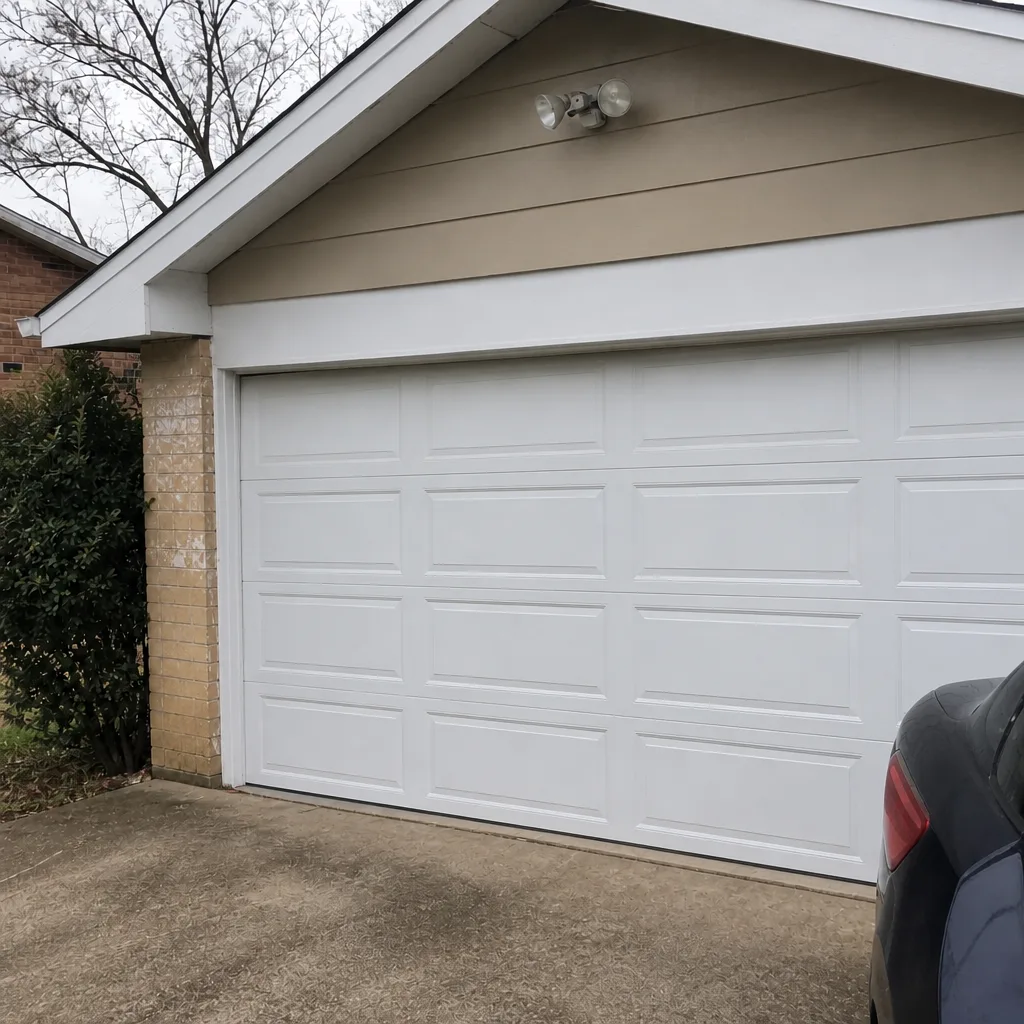
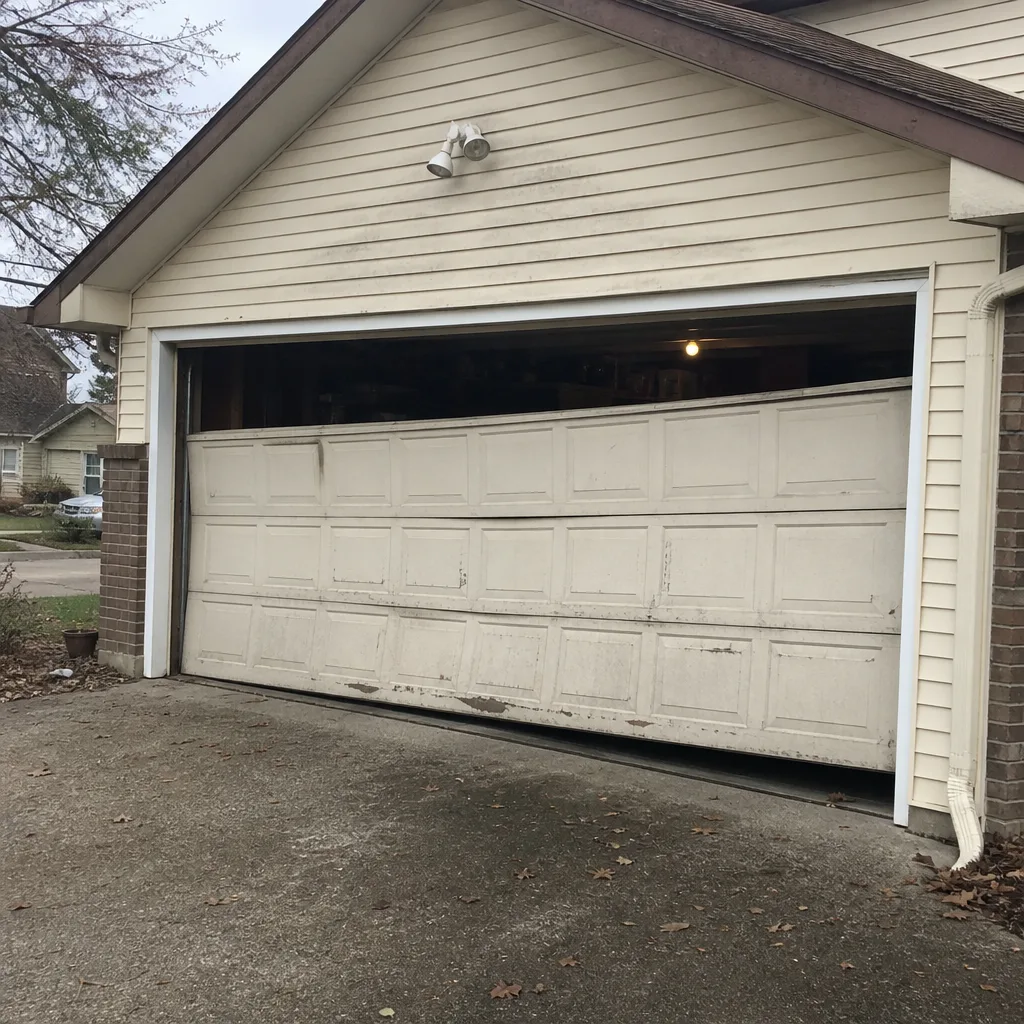
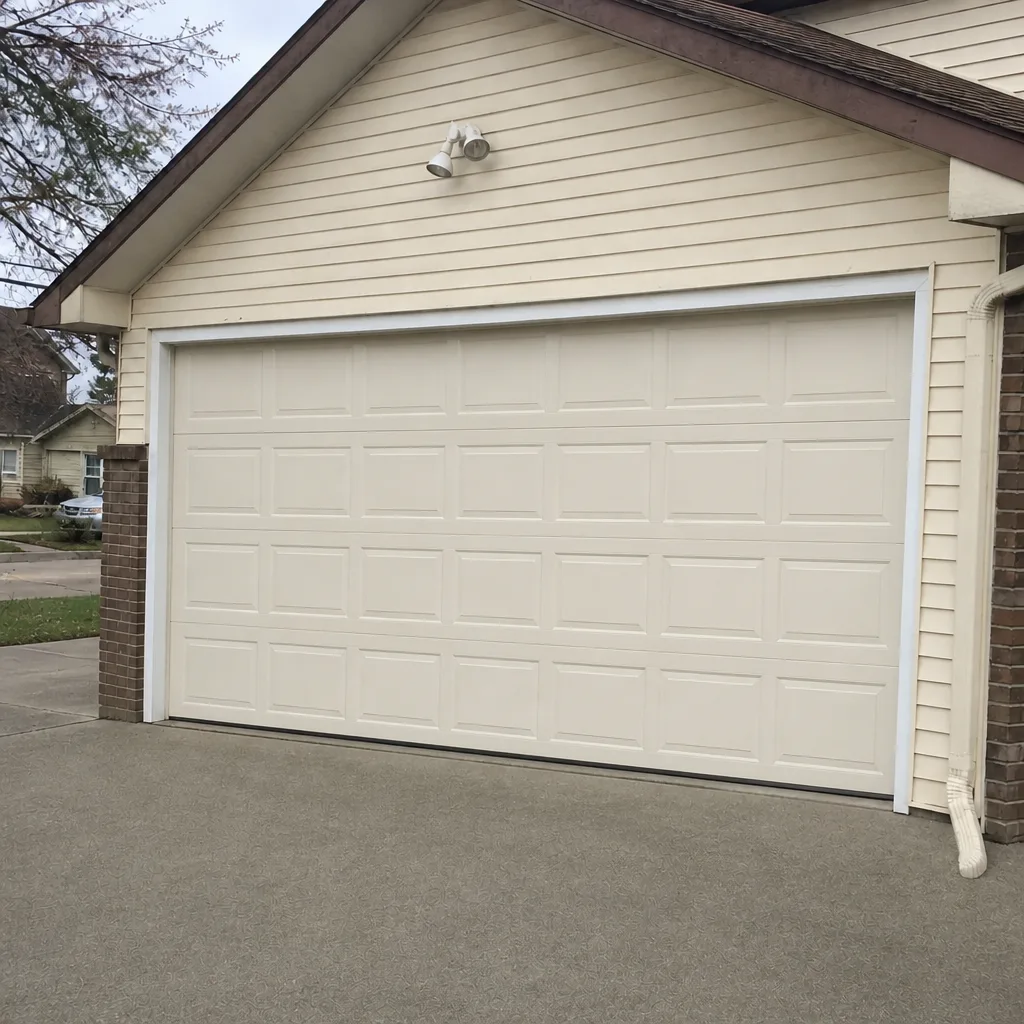
See the difference
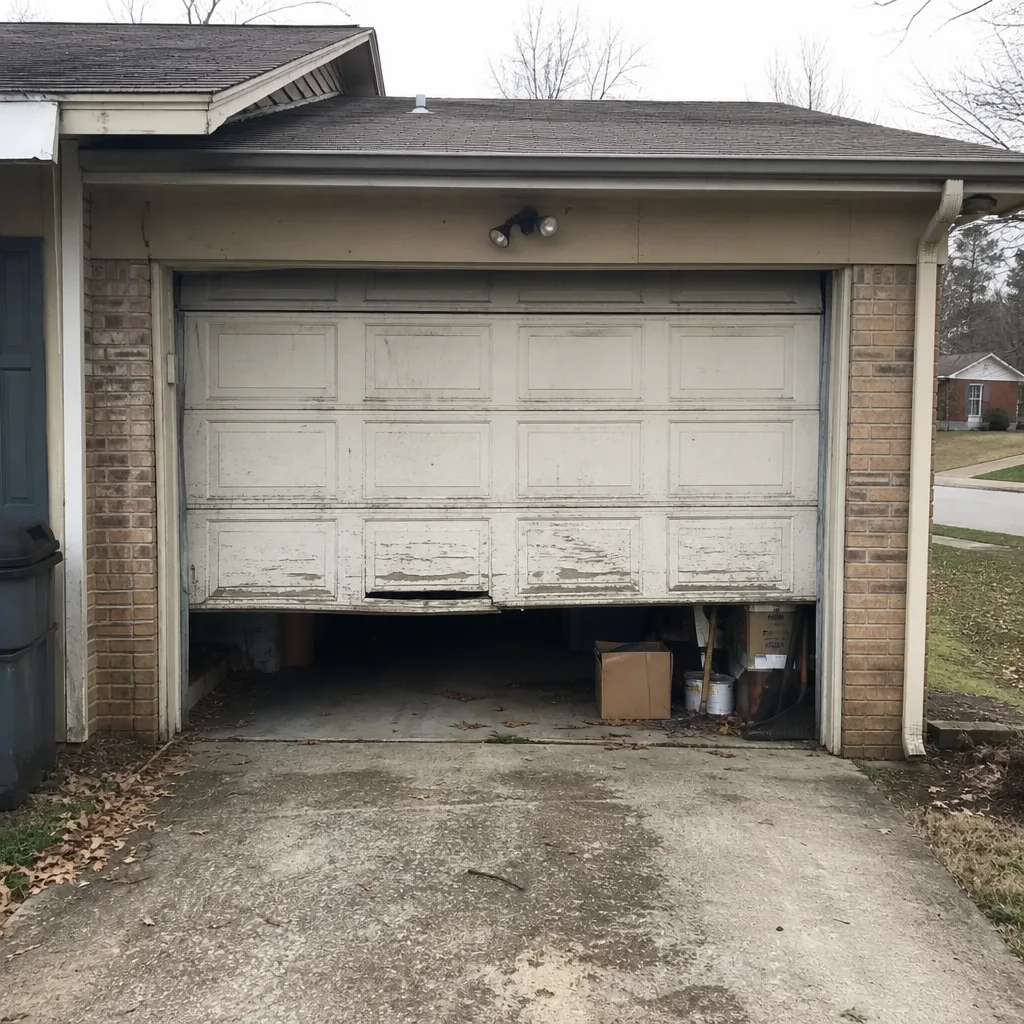 Before
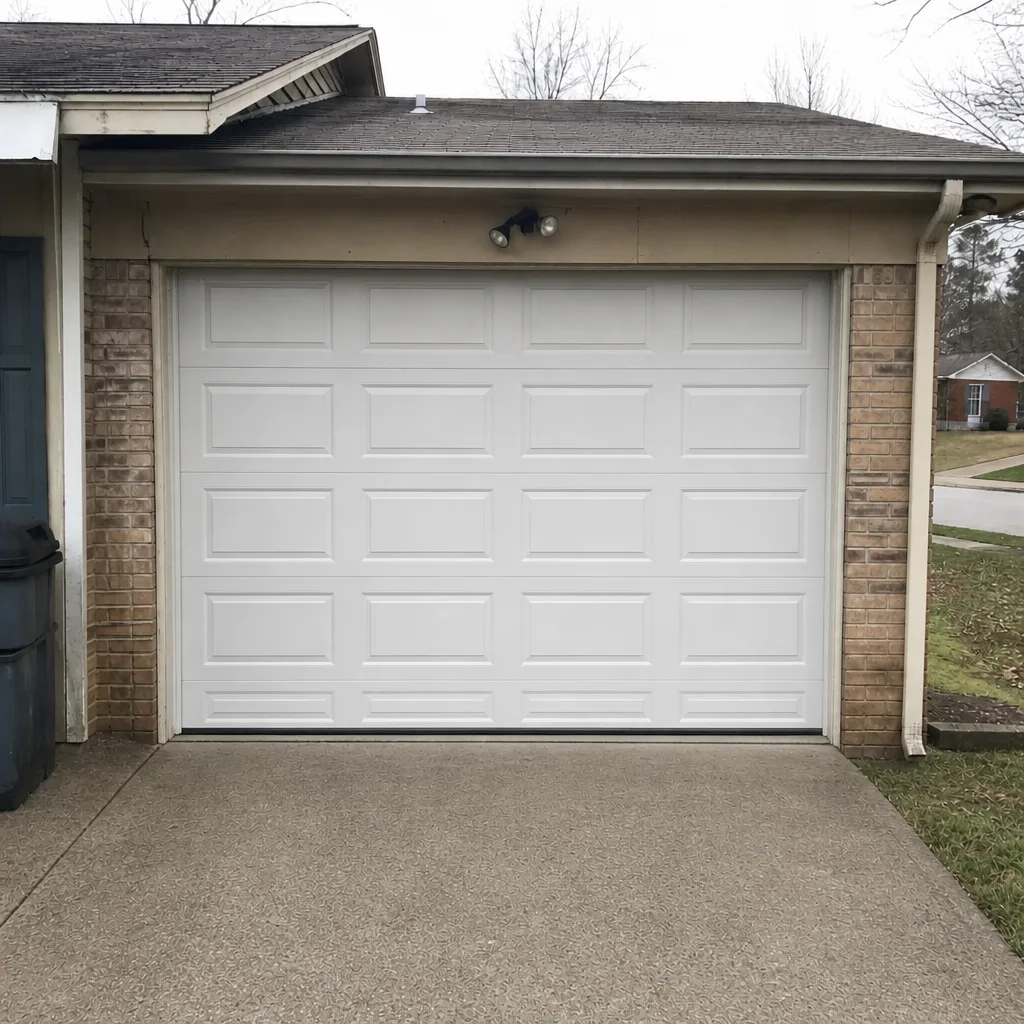 After
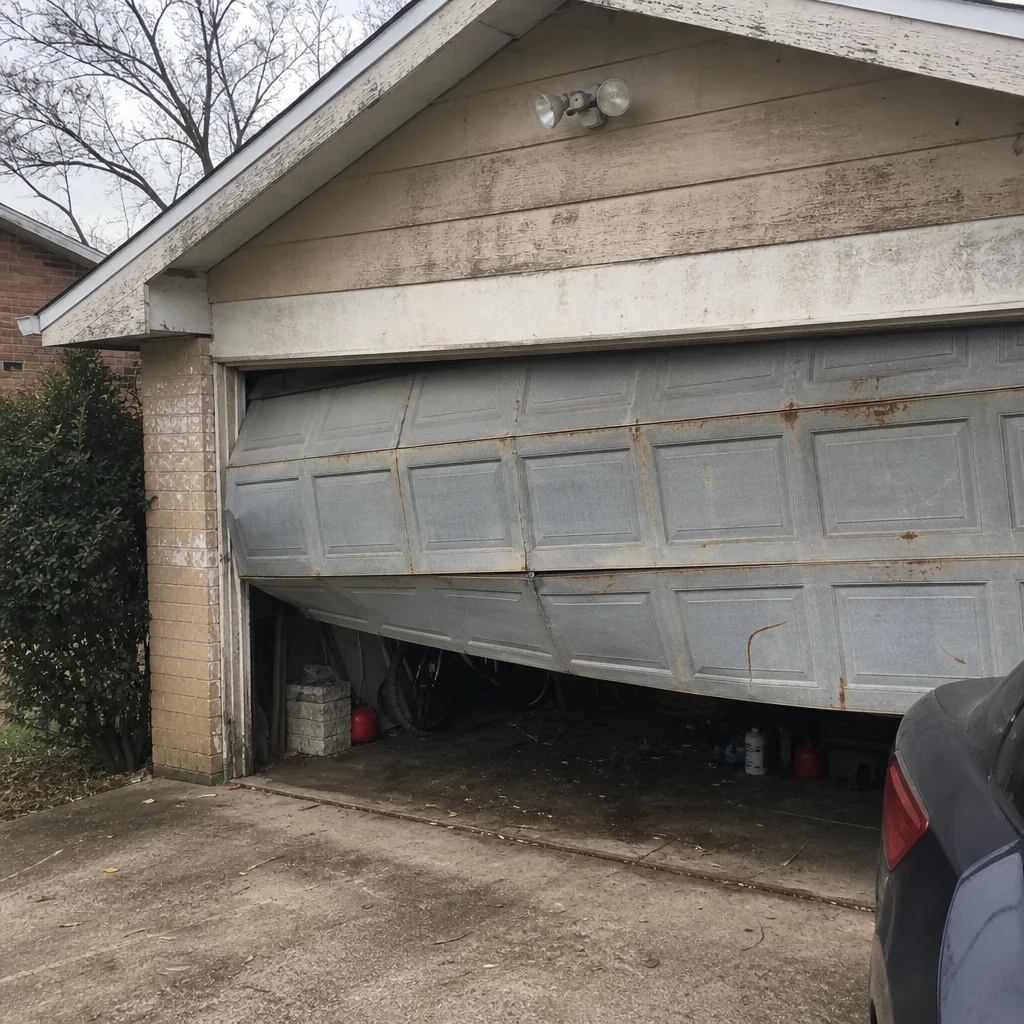 Before
 After
 Before
 After
Common Mistakes to Avoid
- Attempting torsion spring replacement. This is the single most dangerous DIY mistake. The stored energy in the spring can cause serious injury in a fraction of a second, regardless of how careful you are with the winding rods.
- Using WD-40 as garage door lubricant. WD-40 is a solvent, not a lubricant. It strips existing grease, attracts dust, and leaves the moving parts drier than they were. Use a garage-door-specific lubricant.
- Replacing an opener before diagnosing it. A remote that doesn’t work is often a battery or a lost code, not a dead opener. Diagnose first, and repair when possible – most Starling Garage Door Repair service calls that start with “I think I need a new opener” end with a repair instead.
- Adjusting the door’s travel limits without understanding them. The travel limits control how far the door opens and closes. Small adjustments are reasonable, but if you’re moving them by large amounts to compensate for a door that’s binding, you’re masking a problem that needs a different fix.
- Ignoring a slightly bent track. A bent track creates friction, which strains the opener and wears the rollers. It also gets worse over time. A slight bend is easy to fix early and more difficult once the door has been running against it for months.
- Working on a door with visible cable fraying. A frayed cable is under the same tension as a spring. If you can see individual broken strands, don’t touch it. Call a professional.
- Clearing the space under the door while it’s open. If the door is open and you’re working below it, and a spring or cable fails, the door comes down. Always work with the door closed and the tension released when possible.
When to Call a Professional
Call a professional for any work involving torsion springs, extension springs, lift cables, or bottom brackets. Call if the door has come off its tracks, if a cable is visibly frayed, or if the door is binding, crooked, or moving unevenly. Call if a DIY repair attempt has made things worse instead of better. Call if the door is on a house you haven’t owned long and you don’t know its history. And call if the opener’s motor runs but the door doesn’t move – that’s often a stripped gear or a disconnected release, both of which need hands-on diagnosis.
For everything else – lubrication, weatherstripping, sensor alignment, keypad programming, visual inspection – a capable homeowner can handle it, and we’re glad when homeowners do. It keeps small problems from becoming large ones.
Starling Garage Door Repair offers free estimates in Nashville. Call (855) 916-8763. We answer 24/7. Fast dispatch from 7am to 7pm, Sunday through Friday. Closed Saturday.
Frequently Asked Questions
No – torsion spring replacement should always be done by a trained professional. The spring holds the full weight of the door in stored tension, and the release of that energy during an incorrect repair can cause serious injury in less than a second. The danger isn’t about skill; it’s about the physics of the system.
If your spring is broken or making loud noises, call (855) 916-8763. Estimates are free.
Repair is almost always cheaper than replacement when the opener is repairable, and most opener problems are repairable. A dead remote, a misaligned sensor, a stripped gear, and a misadjusted travel limit are all repair jobs. Replacement is the better choice only when the unit is at the end of its service life or a critical part is no longer available.
Call (855) 916-8763 for a diagnosis. Estimates are free, and the price is agreed before any work begins.
Lubrication, weatherstripping replacement, safety sensor alignment, keypad programming, and monthly visual inspection are all safe for a capable homeowner. These tasks carry low risk and don’t involve stored spring tension. Anything that requires touching a spring, cable, or bottom bracket is not a safe DIY task.
If you’re not sure whether a task is safe, call (855) 916-8763 and we’ll tell you over the phone.
No – a door that has come off its tracks should be handled by a professional. Putting it back on the tracks requires releasing and re-engaging the door’s counterbalance system, and doing this incorrectly can cause the door to fall or the springs to release unexpectedly. It’s also a sign that something else caused the door to come off – a bent track, a broken roller, or a cable problem – and that underlying cause needs diagnosis.
Call (855) 916-8763. We answer 24/7. Fast dispatch from 7am to 7pm, Sunday through Friday. Closed Saturday.
Diagnosis comes first. If the motor runs but the door doesn’t move, if the door reverses immediately, or if a remote stops working, those are almost always repair situations. Replacement is the right call when the unit is at the end of its typical service life, when a safety feature has failed and can’t be cost-effectively repaired, or when a critical part is no longer available for that model.
Call (855) 916-8763 for a diagnosis and a written estimate before deciding.
We work on eight major brands: LiftMaster, Chamberlain, Genie, Clopay, Amarr, Wayne Dalton, Craftsman, and Raynor. That covers both door manufacturers and opener manufacturers, so most Nashville homeowners won’t hear “we don’t service that brand” from us.
Call (855) 916-8763 to confirm your brand and get a free estimate.
The Bottom Line
The DIY vs professional question for garage doors isn’t about whether you’re handy. It’s about whether the task involves stored mechanical energy. Lubrication, weatherstripping, sensor alignment, and keypad programming are yours for the taking – they’re low risk, low cost, and they keep your door running smoothly. Torsion springs, cables, and any repair that requires releasing the door’s counterbalance tension are professional-only, and that’s not a matter of skill. It’s a matter of physics. For the work in between, use the “if this goes wrong, what’s the worst outcome?” question as your guide. And if you’re not sure whether a task is safe, call before you start.
If your garage door needs attention in Nashville, call Starling Garage Door Repair at (855) 916-8763 for a free estimate. Our technicians have up to 15 years of experience across the full garage door ecosystem – doors, openers, and installations. We answer 24/7. Fast dispatch from 7am to 7pm, Sunday through Friday. Closed Saturday. Pricing is set per job by a written estimate, so you know the price before any work starts. Learn more about Nashville service or call today.
Written by the team at Starling Garage Door Repair.