
Last updated November 16, 2026
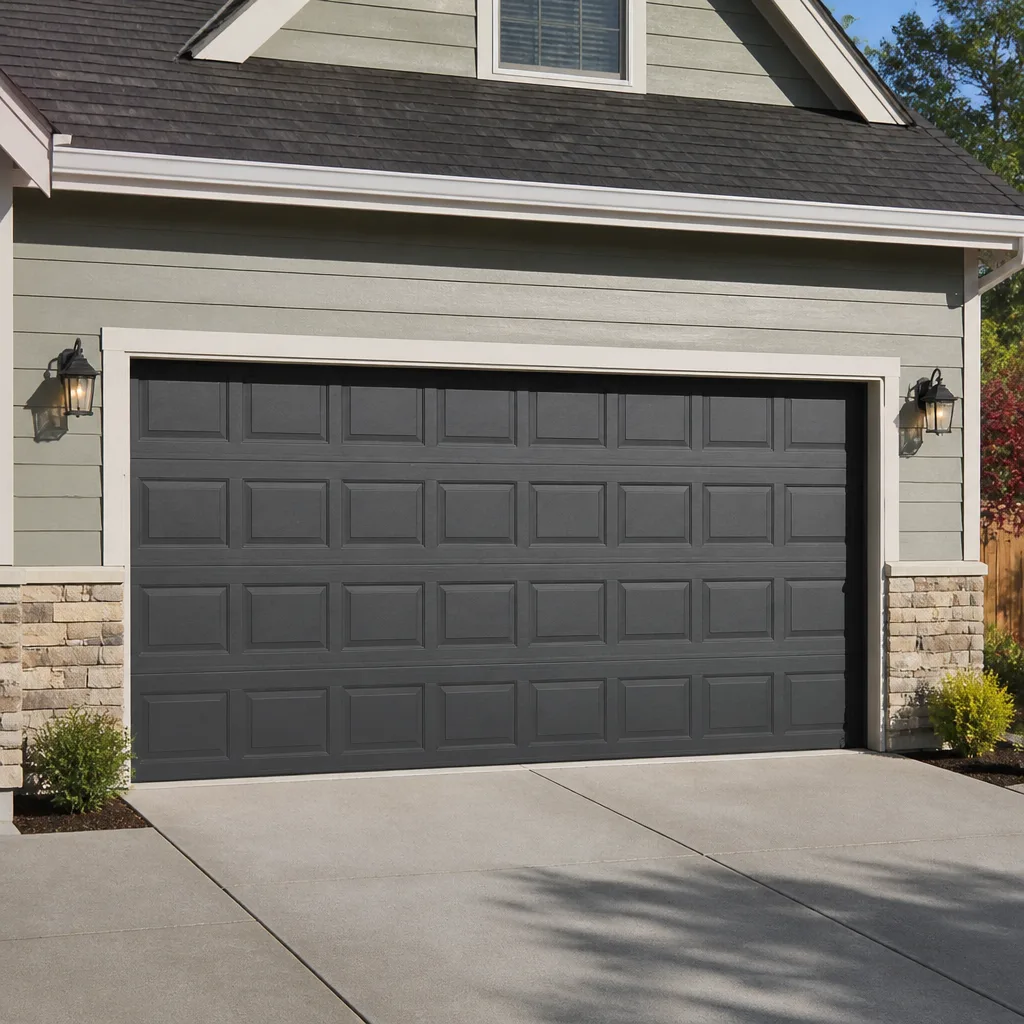 Raised-panel steel
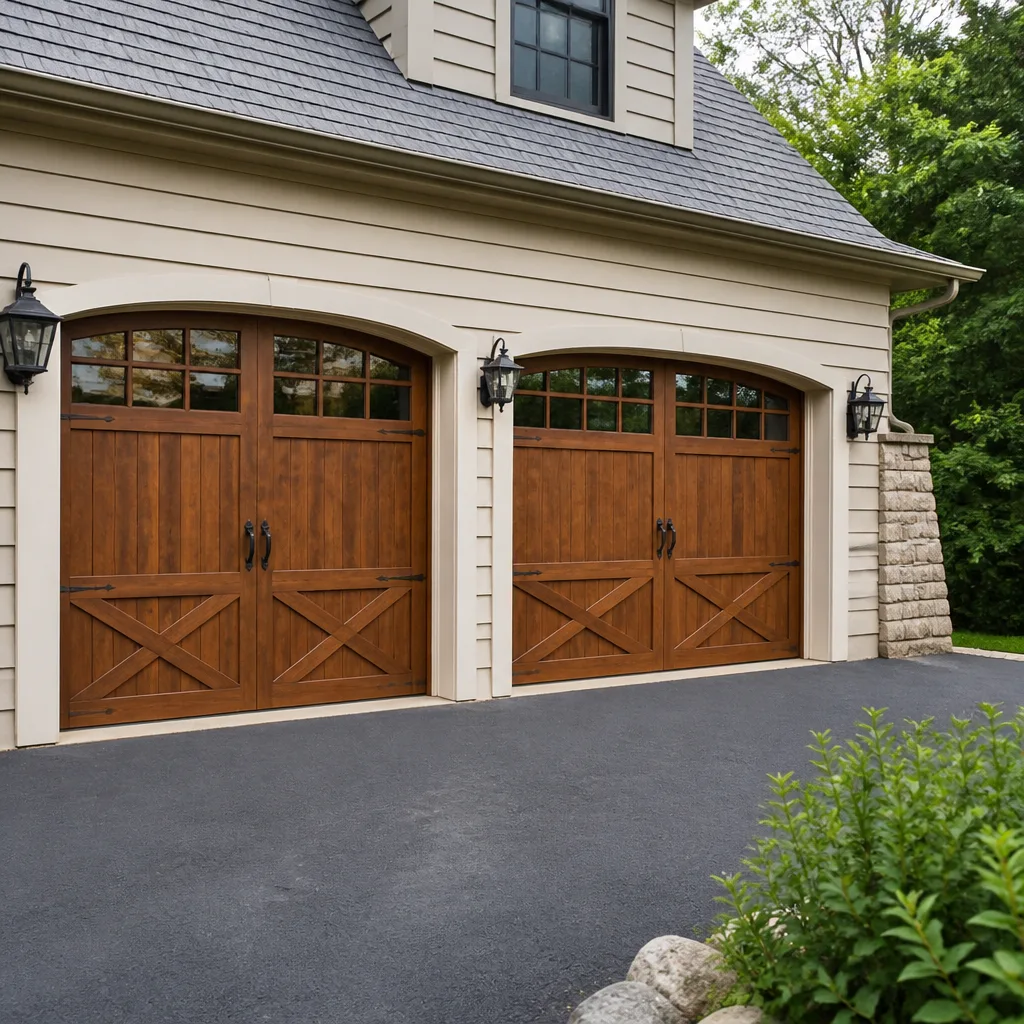 Carriage house
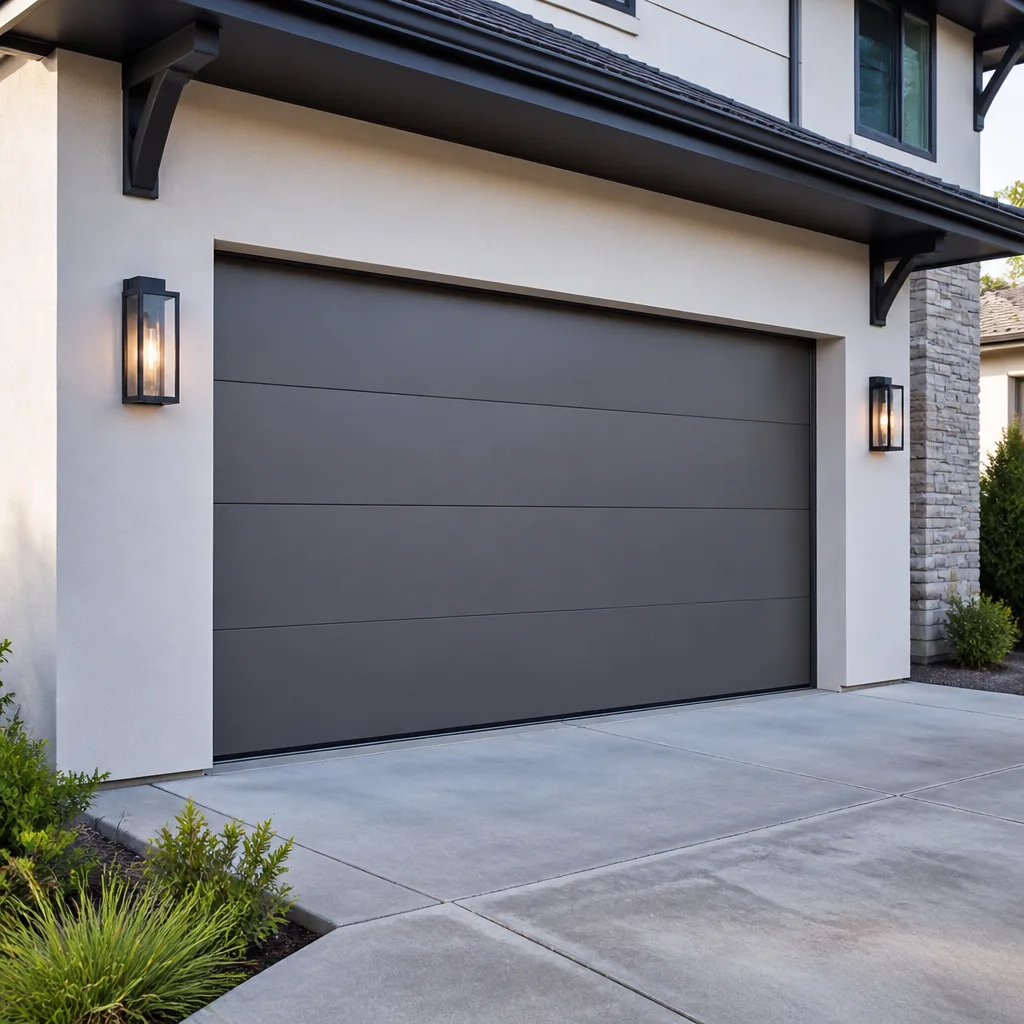 Modern flush
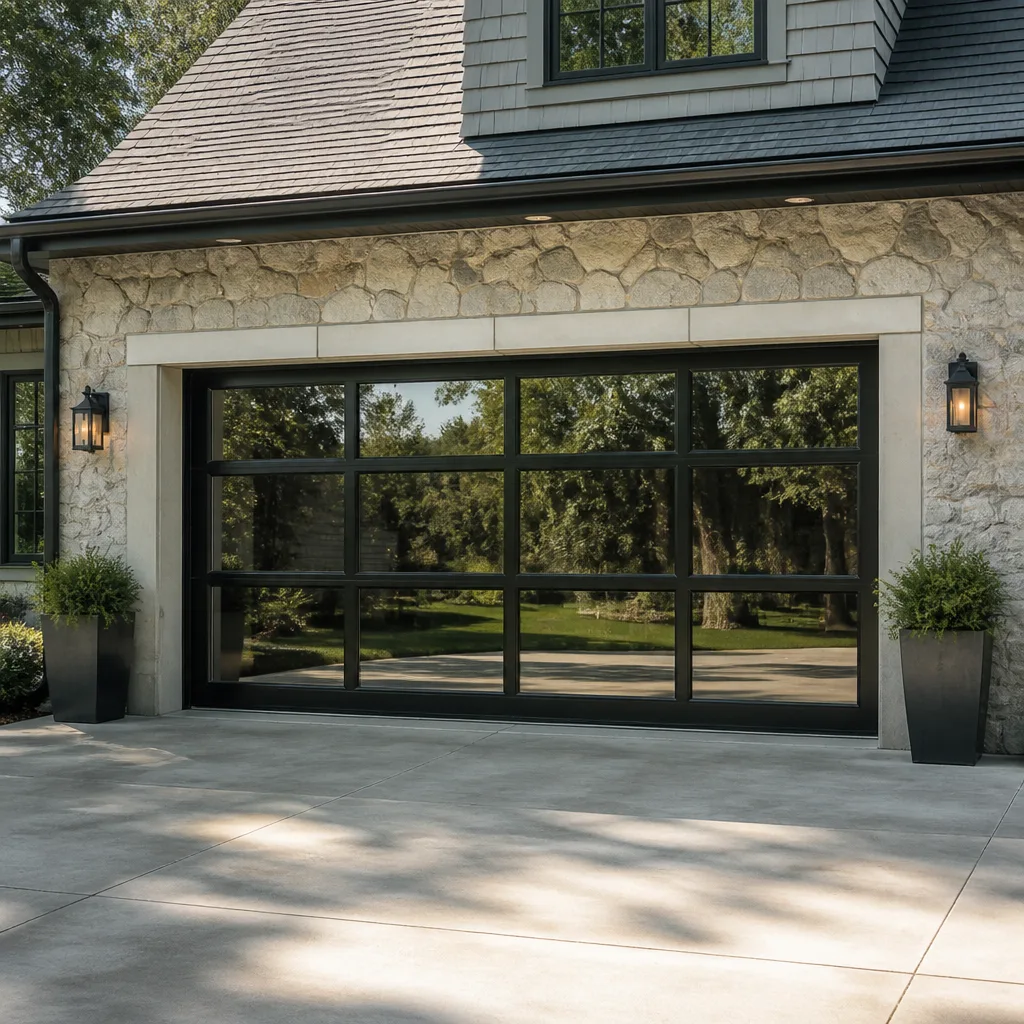 Full-view glass
 LiftMaster openers
 Chamberlain openers
Full 25-point door and opener safety check with every visit - springs, cables, rollers, tracks, and your LiftMaster or Chamberlain opener included
You get a price before we start. It does not change when the pro arrives.
Get your free estimateGarage Door Warning Signs: A Nashville Homeowner’s Reference Guide
A door that reverses two inches off the floor before it closes isn’t malfunctioning. It’s working exactly as designed, sensing an obstruction or force threshold that your springs, tracks, or opener can no longer meet. That behavior is a precise message, not a random glitch. Most warning signs show up weeks before a door actually fails, but the guides that list them rarely explain the mechanical chain behind each symptom. So homeowners can’t tell whether they’re looking at a $150 adjustment or a spring about to let go. This guide connects the symptom to the cause to the urgency, written from a shop that works on Nashville doors every week.
Quick Answer
Garage door warning signs in Nashville fall into three mechanical families: spring wear (sagging, slow lift, a bang from above), track and alignment problems (jerky travel, gaps at the sides, rubbing noises), and opener faults (reversing, grinding motors, remote failures). Symptoms overlap constantly, which is why diagnosis matters more than the symptom list itself. Signs like a door that won’t stay up or a snapped spring mean stop using the door today; most other signs can wait for a scheduled visit within the week.
Styles & brands we work with
- Raised-panel steel
- Carriage house
- Modern flush
- Full-view glass
- LiftMaster openers
- Chamberlain openers
Table of Contents
- The Symptom-to-Cause Reference
- Spring, Track, or Opener? Telling Three Problems Apart
- What to Inspect on a Nashville Door Before Wear Turns Structural
- What New Noises Tell You
- The Honest Urgency Scale
- Nashville Climate and the Wear It Leaves Behind
- Safety Signs That Mean Stop Today
- Common Mistakes to Avoid
The Symptom-to-Cause Reference
Every symptom points to a specific component. The value of the list below is the “why” column, because understanding the mechanism tells you how fast the problem is likely to progress.
- Door reverses before touching the floor. The opener’s force limit or safety sensor is detecting resistance it can’t overcome. Could be a bound track, a weakened spring, or a misaligned sensor. Usually safe to keep operating briefly.
- Door won’t stay open when lifted by hand. Torsion or extension springs have lost tension. This means the door’s full weight is now on the opener. Stop using the electric opener; it’s not built to lift dead weight.
- Loud bang from above the door. A torsion spring has snapped. Stop using the door. This spring stores enormous energy and is not a DIY repair.
- Door goes up crooked or hangs at an angle. One spring has failed on a two-spring setup, or a cable has slipped off its drum. Urgent.
- Jerky, stuttering travel. Usually a track out of alignment, a roller worn flat, or debris in the track channel. Schedule within the week.
- Gap between the door and the frame at one side. Track spread or a bent panel. Lets in water and pests, so worth prompt attention.
- Opener motor runs but door doesn’t move. A broken drive gear, a stripped belt, or a disconnected trolley. The opener needs repair, not replacement in most cases.
- Remote stops working from the driveway. Dead batteries first, then a failing logic board or antenna. A diagnostic visit sorts which.
Spring, Track, or Opener? Telling Three Problems Apart
Slow, jerky, or reluctant movement can come from any of the three main systems on the door. Isolating which one takes a few careful observations, and this is where most homeowners get stuck.
- Disconnect the opener and lift the door by hand. The release cord on the trolley lets you do this safely. If the door is very heavy, hard to lift, or won’t stay at half-height on its own, the springs are the problem, not the opener.
- Check travel smoothness by hand. If the door lifts easily but rubs, sticks, or grinds at one point in its path, the track or a roller is the culprit.
- Listen to the opener in isolation. With the door disconnected, run the opener alone. If the motor grinds, strains, or cycles unevenly, the opener itself has an internal fault.
- Look at the door’s edges at rest. Uneven gaps mean alignment; even gaps with a heavy feel point back to springs.
The reason this matters: in our experience, an opener gets blamed for spring and track problems all the time. Replacing a functioning opener while the springs are failing fixes nothing. On every major brand we work on, from Genie openers to Clopay and Amarr doors, the diagnostic order stays the same: springs, then tracks and hardware, then the operator.
What to Inspect on a Nashville Door Before Wear Turns Structural
A walk-around of your door takes ten minutes and catches the wear that becomes expensive later. These are the inspection points we check first on a Nashville home.
- Springs: Look for a visible gap in a torsion spring coil or stretched-out extension springs. A gap means a broken spring.
- Cables: Frayed, kinked, or slack cables on either side indicate a cable or drum problem. Never touch a cable under tension.
- Rollers: Worn, flat-spotted, or wobbly rollers make the door noisy and accelerate track wear.
- Hinges and brackets: Loose fasteners or rust around the hinge plates are early signs of movement fatigue.
- Panels: Dents, separation at the seams, or cracks in the panel skins. Composite and steel panels behave differently in the humidity here.
- Bottom seal: A flattened, torn, or missing seal lets water and pests under the door and lets conditioned air out.
- Weatherstripping and frame: Cracks or gaps at the frame are where summer storms find a way in.
If you find a problem with the door itself, that’s when it’s time to look at garage door repair rather than nurse the symptom. If the door is sound but the operator misbehaves, the diagnosis is garage door opener repair.
What New Noises Tell You
Noise changes are the most underrated warning sign, because each sound pattern points to a different system. The same door that ran quietly for years suddenly has a new vocabulary, and you should listen to it.
New grinding
Metallic grinding during travel is usually a roller wearing in its track, a torsion tube rubbing against a worn bearing plate, or the opener’s drive gear shedding teeth. In our experience, opener grinding is often the drive gear inside a Genie or Craftsman unit. That gear can usually be replaced, which is why we push diagnosis over replacement.
New rhythmic popping
A steady pop at the same point each cycle usually means a track joint is catching a roller, or a hinge is flexing against loose fasteners. It’s rarely the motor. It’s usually the door telling you a fastener or a roller has drifted.
A tone shift in the opener motor
If the opener’s hum has gotten deeper or strained, it may be fighting resistance that wasn’t there before, usually a stiffer door because of spring or track drag. A whining or clicking from the head unit can signal a failing capacitor or logic board. Either way, diagnosing the operator alone without checking the door is a mistake.
Sound is diagnostic evidence. On a Nashville door, a sound problem that’s ignored for months usually grows into a mechanical one.
The Honest Urgency Scale
Not every warning sign needs the same response. The scale below is the one we use when a homeowner describes a symptom over the phone, because it separates the door that needs to stop today from the one that needs a scheduled visit.
Stop using the door today
- A bang from above and a door that won’t lift: broken spring.
- The door won’t stay open on its own.
- A cable has visibly come off the drum or is slack and hanging.
- The door has come off one track and hangs at an angle.
- Any sign of a damaged torsion tube or a bent center bearing plate.
These all involve stored energy or the door’s weight in the wrong place, and they belong to a trained technician. High-tension springs and cables are the most dangerous part of a garage door; a spring under tension can cause serious injury if it releases unexpectedly.
Schedule within the week
- Jerky travel or inconsistent reversal.
- A door that reverses before touching the floor.
- Excessive noise changes or a bent panel that drags.
- An opener that runs but won’t move the door.
- Uneven gaps at the sides.
Fix at your convenience
- A worn bottom seal or weatherstripping.
- Faded finish, cosmetic dents, or a scratched panel.
- Loose hinges that are otherwise aligned.
- Rollers that squeak but still track correctly.
Nashville Climate and the Wear It Leaves Behind
Nashville’s summers are humid and hot, and its storm season brings wind-driven rain at the door face. That has a predictable effect on the parts that don’t move and the parts that do. Metal panels and fasteners get more moisture exposure than they would in a drier climate, so rust on hinges, springs, and track brackets is common. Spring steel that gets damp can weaken faster, and a spring that’s already slightly weak will show it on the hottest days.
Humidity also swells wooden door frames and can distort the bottom seal, so a seal that fit snugly last fall can sit uneven by summer. On a Clopay or Wayne Dalton door, the panel skins are engineered to handle this, but the hardware around them isn’t indestructible. If you own a home in an older Starling Garage Door Repair service area, a seasonal check of the frame and seal is worth the ten minutes. If water is pooling at the threshold after a storm, the door’s seal or frame is telling you something before the panels do.
Wind-driven storms are worth a separate note. Hail isn’t a frequent problem in Nashville, but wind and flying debris are. A door that took a hit in a spring storm should be checked for panel separation and track alignment before it becomes a structural issue.
Safety Signs That Mean Stop Today
Some signs are not maintenance items. They belong to the category of “call today and don’t operate the door in the meantime.” These are the ones we want homeowners to take seriously because they involve stored mechanical energy, not just cheap convenience.
- Snapped torsion spring: A visible gap in a spring above the door. The spring stores enough force to injure anyone standing near it. Stop using the door.
- Detached or slack cable: A cable off its drum can whip and cause serious injury. Don’t touch it and don’t operate the door.
- Broken center bearing plate or torsion tube: If you can see a bent or fractured part above the door, the system is compromised.
- Door off one track: A door hanging at an angle can fall. Don’t force it back into place.
- Repeat reversing with a child or pet in the path: If the safety reverse doesn’t reliably trigger on contact, stop operating the door and have the sensor and force limit checked.
We don’t recommend tightening springs or cables yourself. A trained technician with the right tools and experience is the correct answer every time. If you’re ever unsure whether a sign is cosmetic or dangerous, the cost of a check is small compared to the risk of guessing wrong.
Common Mistakes to Avoid
- Replacing the opener when the door is the problem. If the door is heavy or sticking, a new operator will just be a more expensive version of the old failure. Diagnose the door first, and replace the opener only when the motor or board is actually failing.
- Tightening springs to “fix” a slow door. Springs are calibrated to the door’s weight. Over-tightening them is dangerous and won’t solve the underlying issue. Call a technician for spring work.
- Greasing track channels. Tracks should be kept clean and dry. Lubricant attracts grit, which binds the rollers. A dry track and clean rollers are what you want.
- Ignoring a small gap at the sides. In a Nashville storm season, a small gap lets in wind-driven rain and pests. Fix the alignment when the gap is small; the panel damage is what gets expensive.
- Forcing a door that’s off its track. A crooked door can fall and damage the panels or injure someone. Stop and call.
- Buying a new remote when the opener is at fault. A dead remote is often the opener’s logic board or antenna, not the remote. Diagnose before you spend.
- Assuming the same opener brand fixes everything. A single-brand dealer may sell you a replacement when a repair would do. Look for a specialist who works on your brand, whether that’s Genie, Chamberlain, or a Clopay door.
See the difference
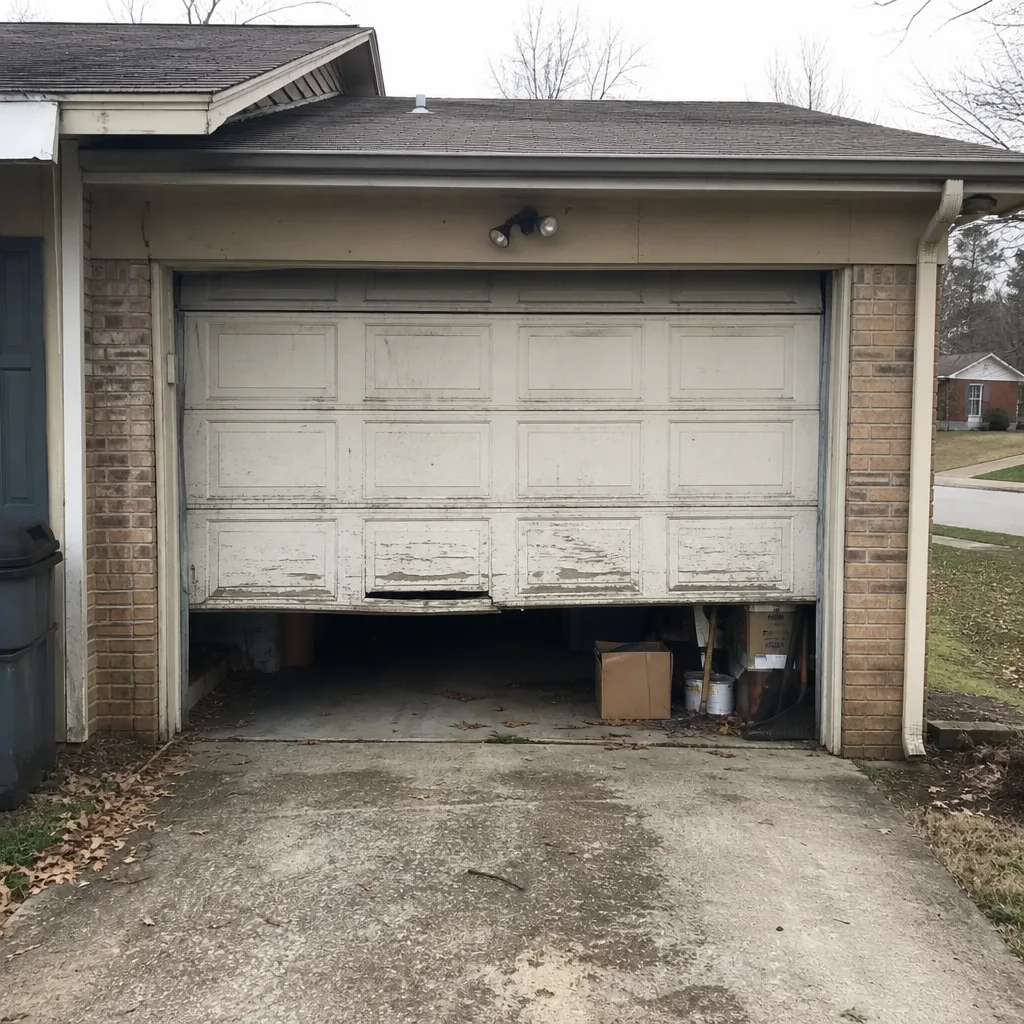 Before
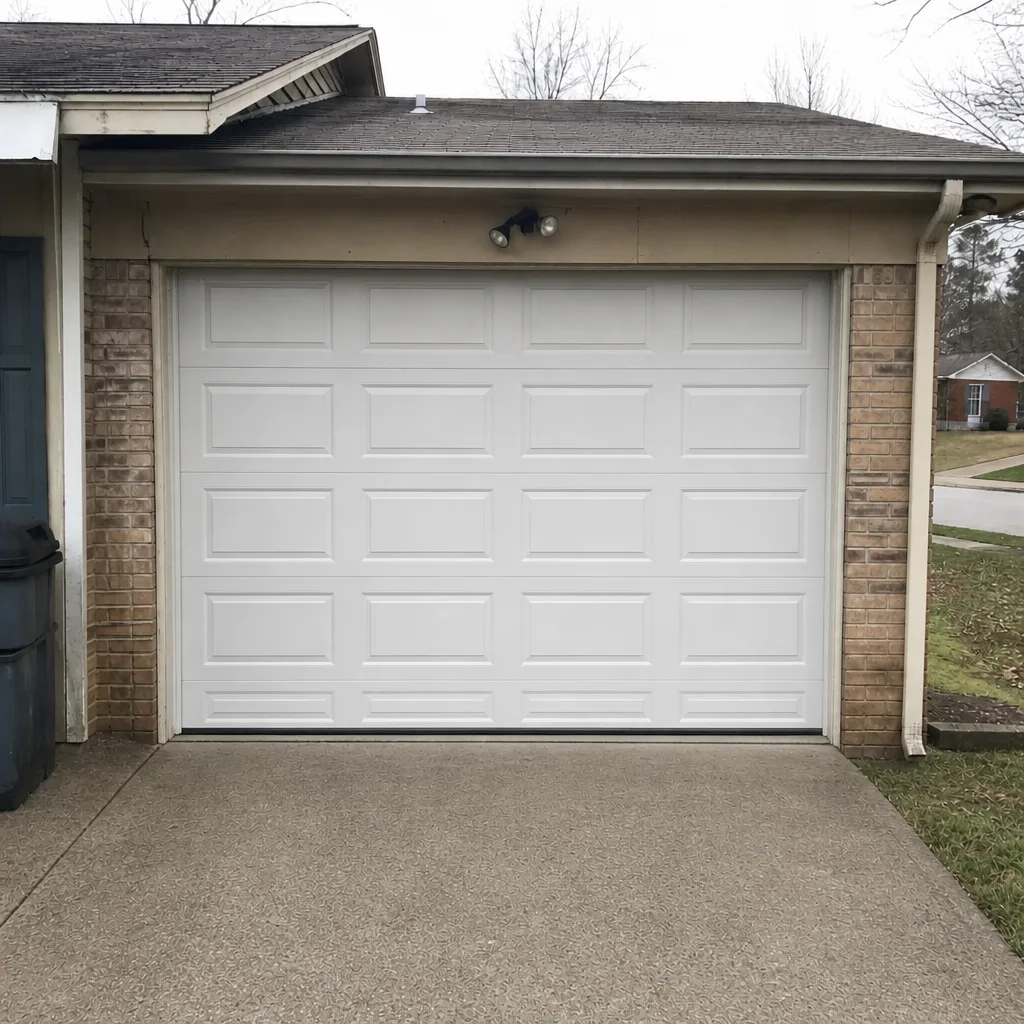 After
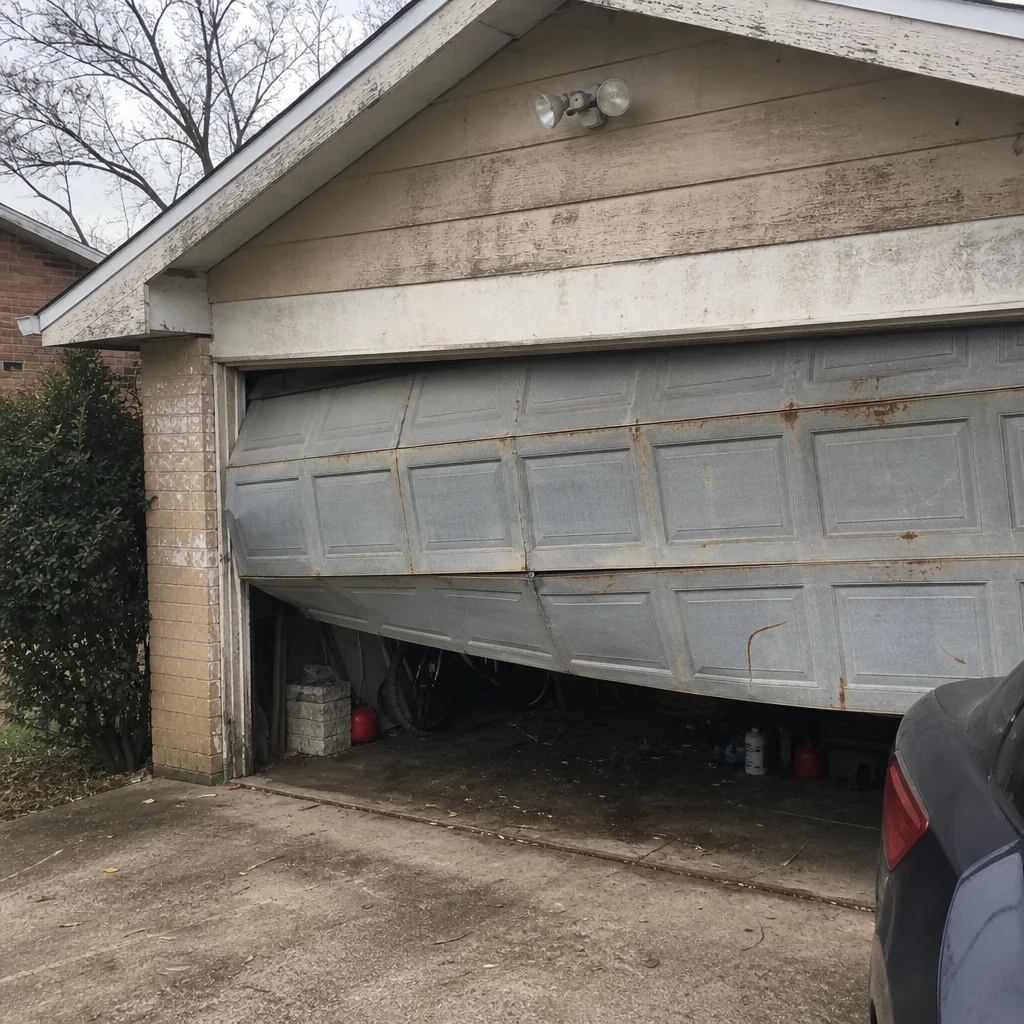 Before
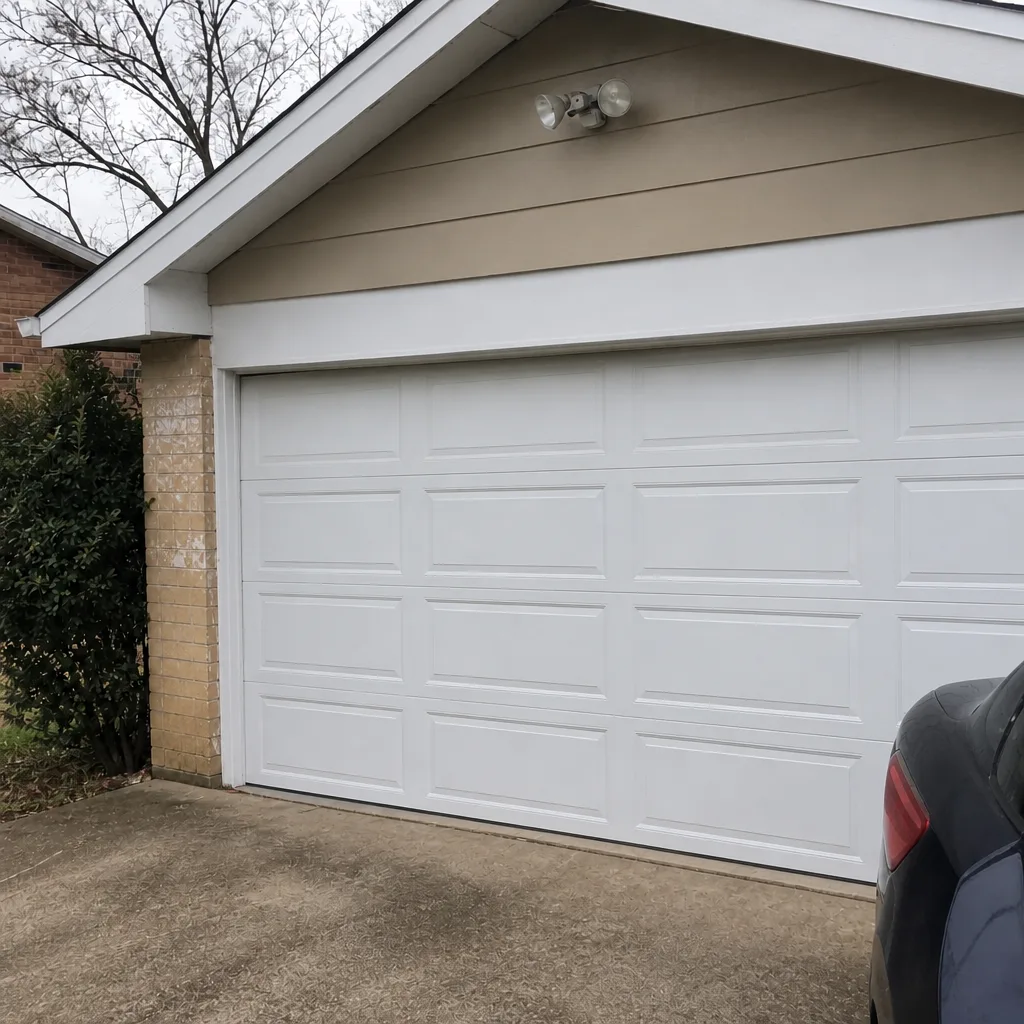 After
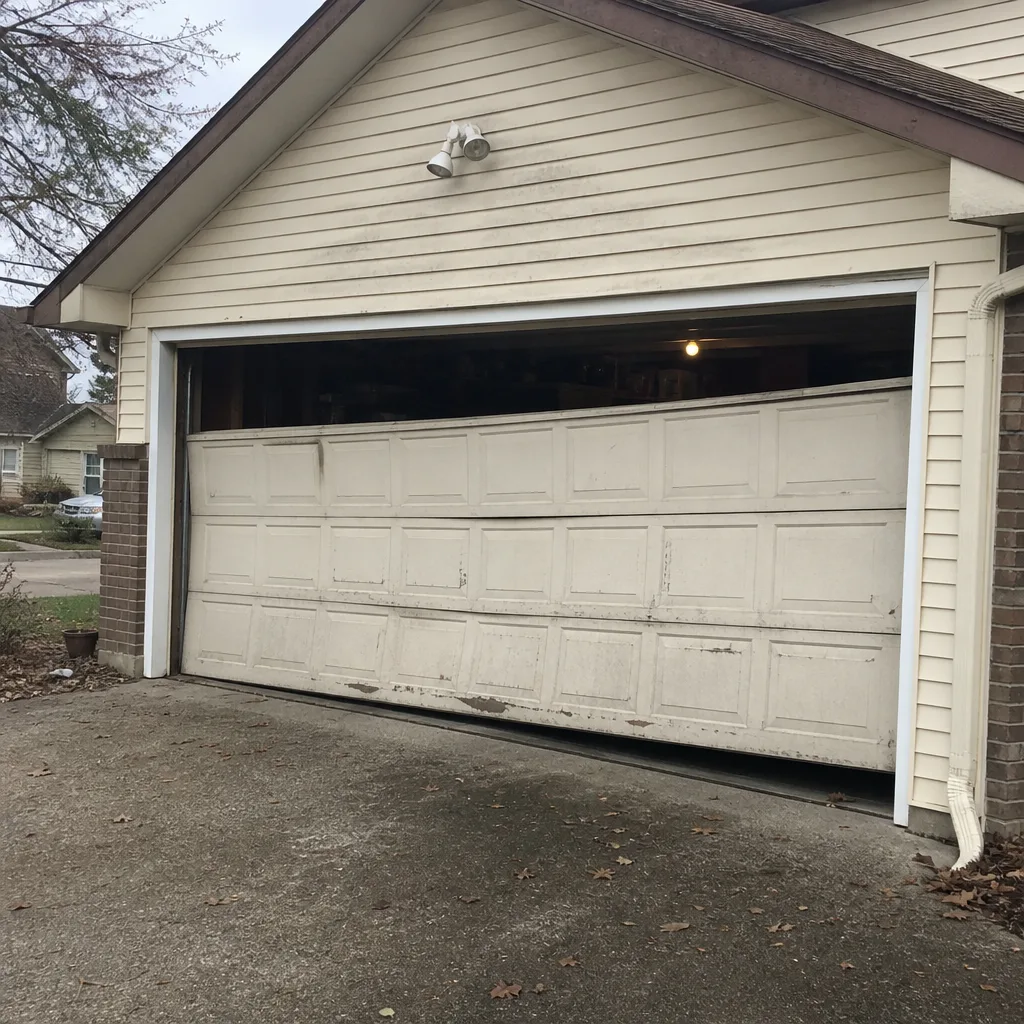 Before
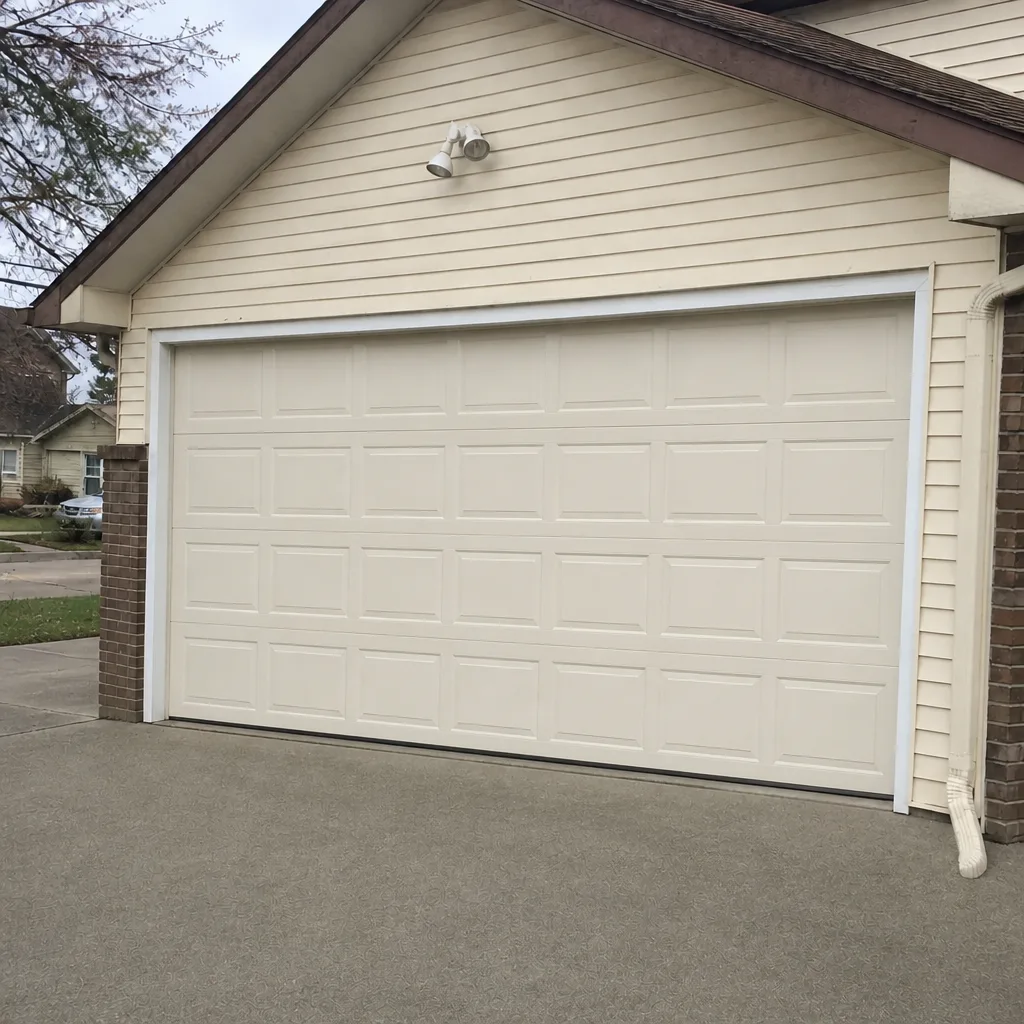 After
When to Call a Professional
Call a professional when the sign involves a spring, a cable, or the door’s weight in the wrong place. Also call when symptoms overlap in ways that make the cause unclear, when the opener misbehaves after you’ve checked the door by hand, or when you find a problem you can’t judge the urgency of. Starling Garage Door Repair offers free estimates in Nashville, and our technicians diagnose before recommending repairs or replacement. Call (855) 916-8763. We answer 24/7. Fast dispatch from 7am to 7pm, Sunday through Friday. We work on your brand across eight major manufacturers, so you won’t hear “we don’t service that.”
Frequently Asked Questions
The earliest warning signs are usually a door that reverses before touching the floor, uneven gaps at the sides, and a change in noise. Slower lift, a heavier feel when you lift the door by hand, and new grinding or popping sounds all show up weeks before a spring or cable fails. If you notice any of them, it’s worth a check before the slowdown turns into a breakdown.
You know the spring is broken if you hear a loud bang from above the door and the door won’t lift, or if you see a visible gap in a torsion spring coil. A door that won’t stay open on its own is another sign. Stop using the door and call us; springs store serious energy and aren’t a DIY repair.
You can usually use it briefly, but grinding is a sign to schedule a visit within the week. Grinding often means a drive gear inside the opener is wearing or a roller has gone bad, and it gets worse with use. Running it for a few more days is different from running it for months. Call us to check the opener before the noise becomes a failure.
It reverses because the opener’s force limit or safety sensor is detecting resistance it can’t overcome, and that behavior is the door’s safety system working correctly. The cause is almost always a bound track, a worn spring, or a sensor that’s knocked out of alignment. We can tell you which one with a diagnostic visit. Call (855) 916-8763 for an exact answer; estimates are free.
Some problems do progress faster here. Nashville’s humid summers put extra moisture on springs, hinges, and tracks, and storm-driven rain can work its way into gaps at the sides of the door. A seal or frame problem that would coast in a dry climate here becomes a real leak. If you spot moisture at the threshold, fix the cause, not just the puddle.
No, the price is set per job by a written estimate, and we quote it before any work starts. If something changes after the diagnostic, we’ll tell you and get your agreement before we proceed. Call (855) 916-8763 for an exact quote. Estimates are free.
If your equipment is made by LiftMaster, Chamberlain, Genie, Clopay, Amarr, Wayne Dalton, Craftsman, or Raynor, we service it. Those eight brands cover most of what’s installed in Nashville homes. If you’re unsure which brand you have, tell us on the call and we’ll point you to the right service.
The Bottom Line
Warning signs on a garage door are specific messages, not random quirks. Reversing before the floor usually means the opener is correctly detecting a spring or track problem, not that the door is broken. Jerky travel, new noises, and gaps at the sides each map to a distinct mechanical cause, and knowing that mapping is the difference between a scheduled repair and a call in the middle of a failure. Use the urgency scale here to decide which signs stop the door today and which can wait a week. If you’re ever unsure, our technicians have up to 15 years of experience and will tell you plainly what’s wrong.
Starling Garage Door Repair is a garage door specialist for Nashville and the surrounding area. We cover repair, opener repair, and installation across the brands most often installed here, and we repair first before we recommend replacement. Call (855) 916-8763 for a free estimate. We answer 24/7. Fast dispatch from 7am to 7pm, Sunday through Friday.
Written by the team at Starling Garage Door Repair.