
Last updated November 16, 2026
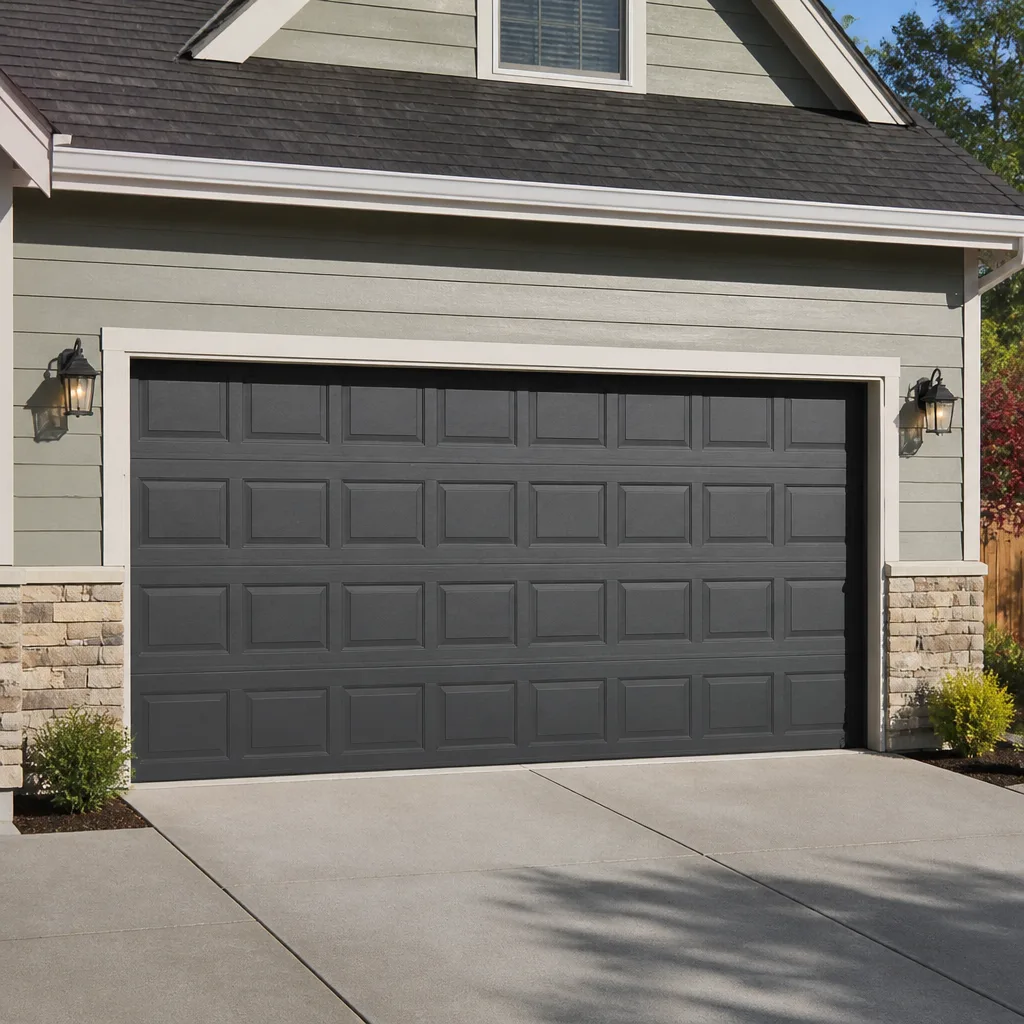 Raised-panel steel
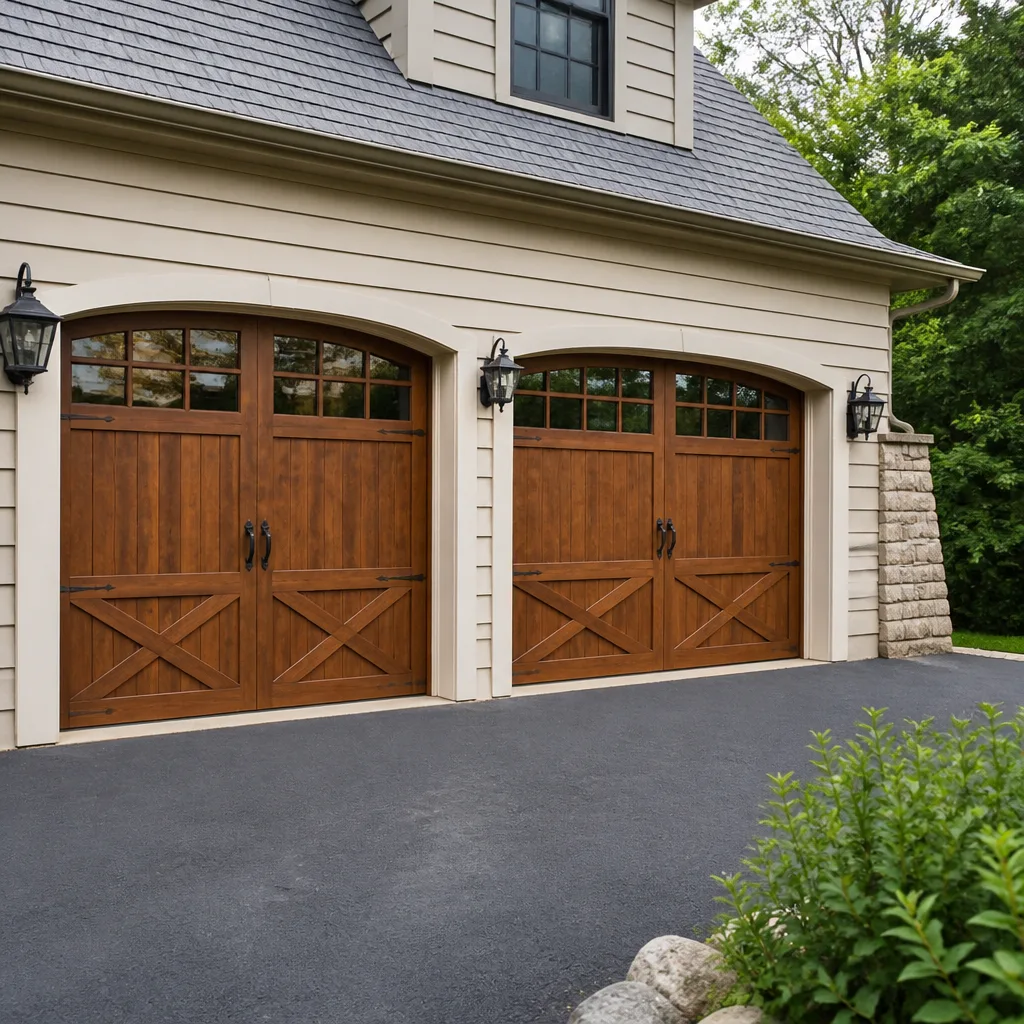 Carriage house
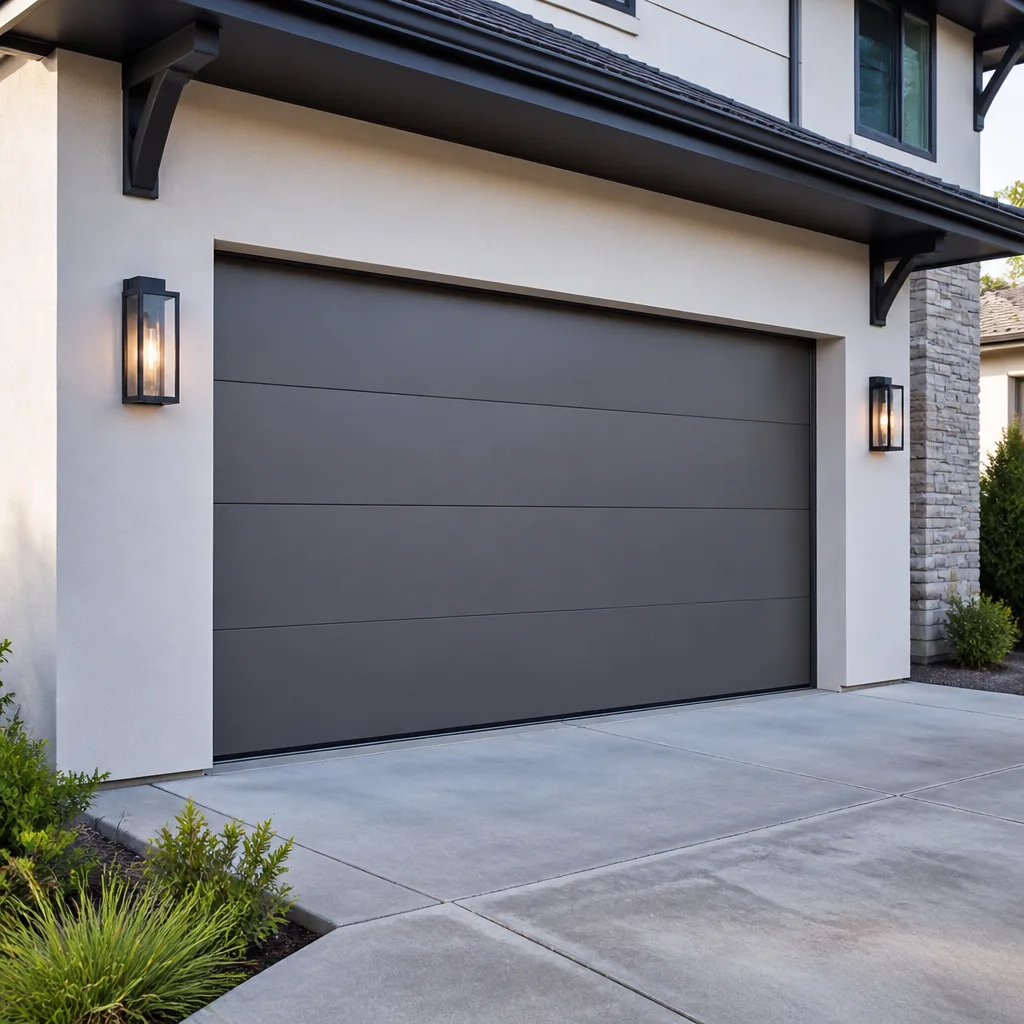 Modern flush
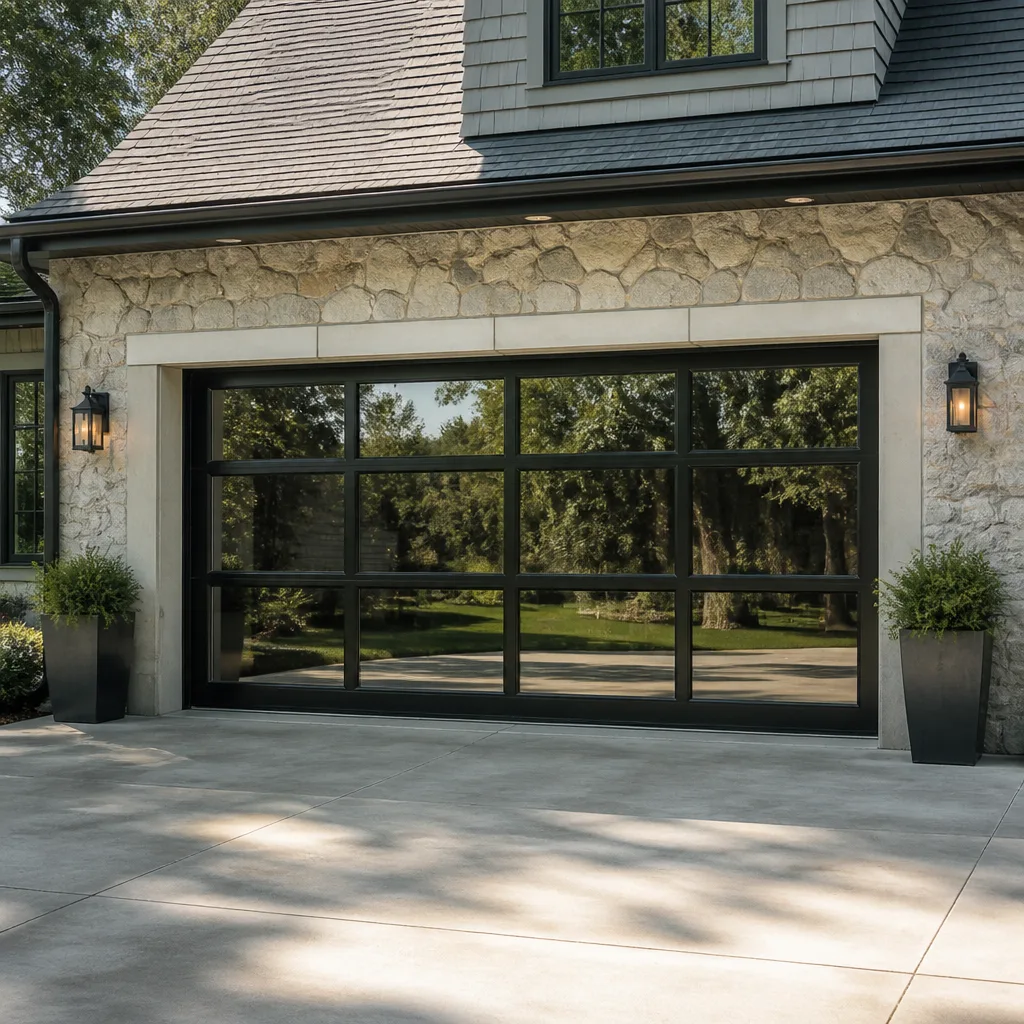 Full-view glass
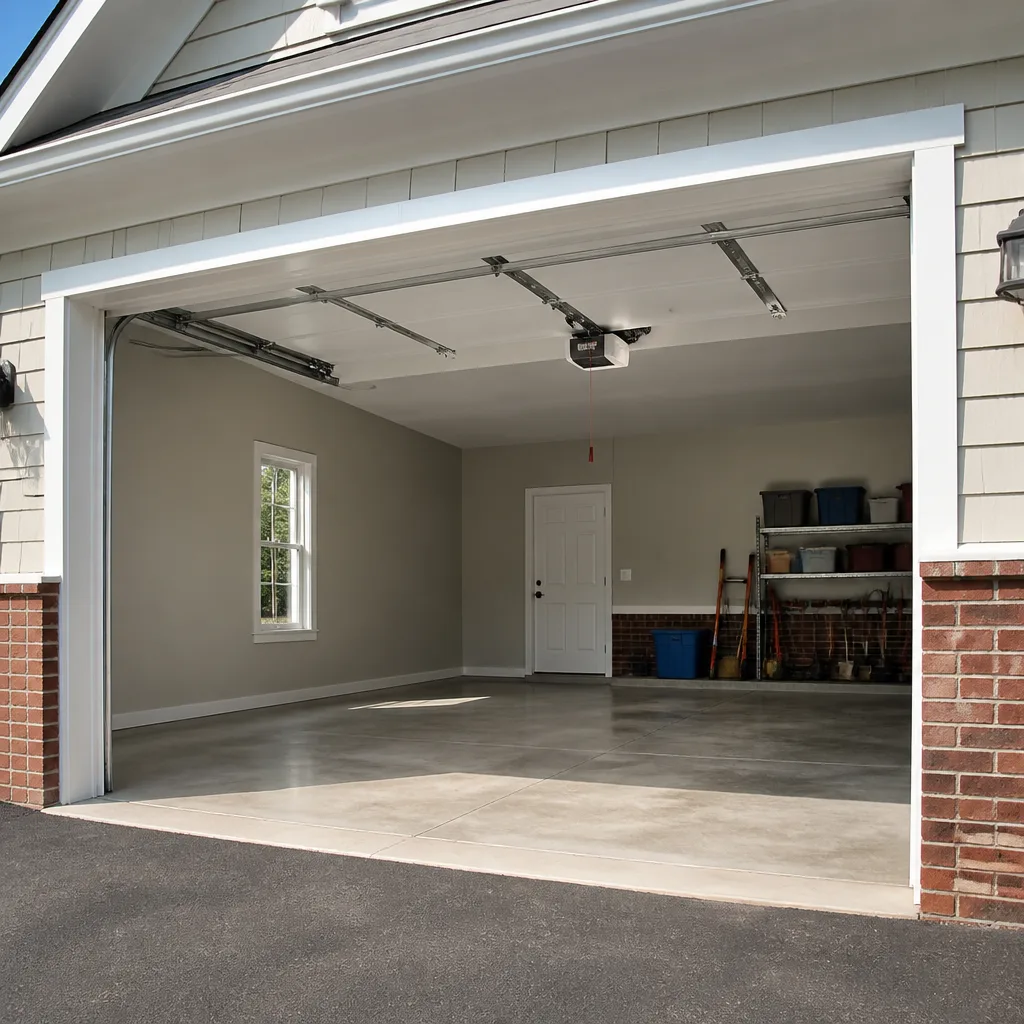 LiftMaster openers
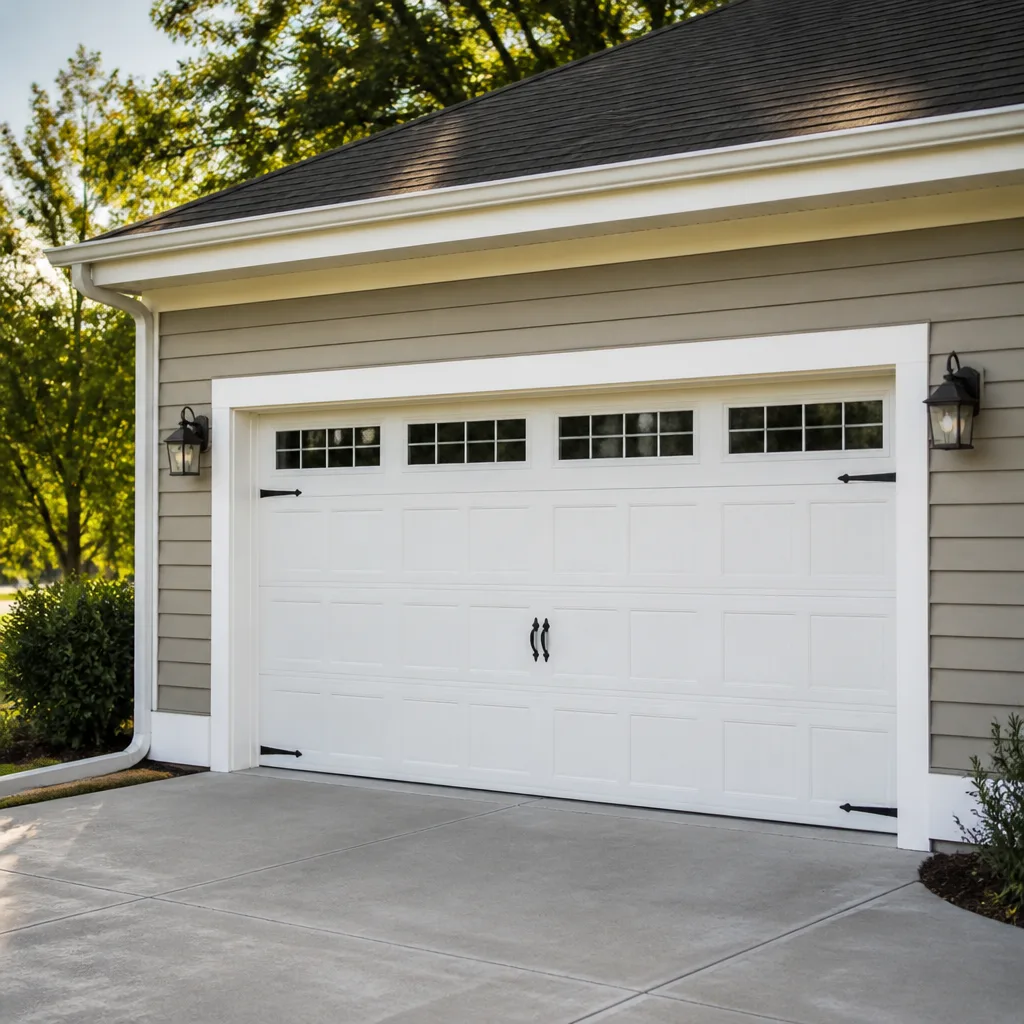 Chamberlain openers
Full 25-point door and opener safety check with every visit - springs, cables, rollers, tracks, and your LiftMaster or Chamberlain opener included
You get a price before we start. It does not change when the pro arrives.
Get your free estimateThe Complete Guide to Garage Doors in Nashville
The most common reason a garage door replacement goes wrong isn’t the product choice. It’s the installer who measured for a standard opening without checking whether the house has low-headroom framing, a hip roof, or a finished ceiling that cuts clearance to under 10 inches. Nashville’s housing stock runs from post-war bungalows to 1990s subdivisions to new-build infill, and each era came with different door standards, clearance norms, and opener rough-ins. In this guide we walk through how your house’s vintage shapes every decision, from track configuration to insulation value, so you can choose repair, replacement, or an opener upgrade with your eyes open instead of a sales pitch in your ear.
Quick Answer
A garage door in Nashville should be chosen by matching your home’s era and framing to the right door, track configuration, and opener rather than by picking a style first. Older homes often need high-lift or non-standard track setups because of low ceiling clearance, while newer infill builds usually accept standard-lift doors with modern openers. Insulation matters more in Nashville than in purely cold or purely warm climates because humid summers and occasional hard freezes both stress an uninsulated door.
Styles & brands we work with
- Raised-panel steel
- Carriage house
- Modern flush
- Full-view glass
- LiftMaster openers
- Chamberlain openers
Table of Contents
- How Nashville’s Housing Eras Shape Your Garage Door
- Why Nashville’s Climate Changes the Door You Should Buy
- Standard-Lift, High-Lift, and Vertical-Lift: Which One Your Garage Needs
- Attached Garages and Fire Separation in Newer Nashville Construction
- Choosing and Repairing Openers: LiftMaster, Chamberlain, Genie
- Repair, Replace, or Upgrade the Opener Only: A Decision Tree
- What Routine Care Actually Prevents in Nashville
- What Garage Door Work Typically Costs
How Nashville’s Housing Eras Shape Your Garage Door
Nashville’s neighborhoods were built in distinct waves, and each wave left behind its own garage geometry. A door that fits one era cleanly may need custom work in another, and knowing which era your house belongs to is the first step toward a choice you won’t regret.
Post-war bungalows and 1960s ranch homes
These houses often have shallow garages with low ceiling clearance, sometimes under 10 inches above the door in the open position. Door openings tend to be narrower than modern standards. Many were built for a single car with a manual door, then retrofitted with an opener later, which means the framing and springs may never have been sized for the extra weight and cycle count a motorized door brings. In our experience, these garages are the ones most likely to need a high-lift track conversion or a torsion spring retrofit rather than a like-for-like replacement.
1980s and 1990s subdivisions
Suburban builds from this period usually have two-car garages with standard 16-foot openings and enough headroom for a conventional setup. The weak point is age. Doors from this era are often original, with worn rollers, stretched springs, and openers that use older safety technology. When we look at a Nashville door from the 1990s, the question is rarely whether it can be repaired; it’s whether a repair still makes sense against the door’s remaining life.
Modern infill and new construction
Newer infill homes in Nashville often pair an attached garage with living space above or beside it, which brings fire-separation requirements into the picture and pushes builders toward specific door materials. These garages usually have generous headroom and modern openers, so the decisions here tend to be about insulation, sealing, and matching the door to the home’s exterior rather than solving a structural constraint.
Why Nashville’s Climate Changes the Door You Should Buy
Nashville sits in a climate that swings both ways. Summers are humid and hot, and winters bring occasional hard freezes that can arrive fast. That combination puts demands on a garage door that neither a purely cold climate nor a purely warm one does, and it’s the reason insulation and sealing deserve more attention here than most homeowners give them.
Humidity and the uninsulated door
A single-layer steel door with no insulation acts like a cold drink glass in August. Moisture condenses on the interior surface when the humid outside air meets cooler garage air, and over time that moisture finds its way into hinges, rollers, and the bottom of the door. Insulated doors reduce that condensation because the interior surface stays closer to ambient temperature. They also keep the garage from baking in July, which matters if you use the space for storage, a workshop, or anything sensitive to heat.
Hard freezes and door operation
When Nashville gets a hard freeze, an uninsulated door can ice at the bottom seal and stick to the floor. The opener then strains against a door that won’t move, and that strain is where premature opener failure often starts. A well-sealed, insulated door with a properly adjusted bottom weatherstrip handles a freeze far better. It’s one of the cheapest improvements you can make, and it protects the opener at the same time.
What insulation value actually means for you
Insulation is measured in R-value, and higher is better, but the number matters less than the construction. A door with insulated panels and thermal breaks between the sections performs better than one with a thin sheet of foam inserted after the fact. If your garage shares a wall or ceiling with living space, insulation is doing double duty as comfort control. For a detached garage used only for parking, a basic insulated door is usually enough.
Standard-Lift, High-Lift, and Vertical-Lift: Which One Your Garage Needs
Track configuration is the part of a garage door system homeowners almost never think about until something goes wrong, and it’s the single biggest reason a standard replacement fails in an older Nashville garage. The track decides how the door travels as it opens, and the wrong choice means the door either won’t clear the ceiling or won’t fit the opening.
Standard-lift
Standard-lift is the default in most homes. The door travels back along a horizontal track that sits just above the opening, and the door ends up under the ceiling. It needs roughly 12 inches of headroom above the door in the open position. If your garage has that clearance and no obstructions, standard-lift is the simplest and least expensive option.
High-lift
High-lift raises the door higher before it turns back, so the door ends up closer to the ceiling. It’s the fix for garages with low headroom, and it’s also what you need when something occupies the space where a standard door would normally travel, like a storage rack, a duct, or a soffit. Many 1960s Nashville ranch homes need high-lift because the original framing left less than 12 inches of clearance.
Vertical-lift
Vertical-lift sends the door straight up and keeps it vertical, with no horizontal track at all. It’s used in commercial settings and in residential garages where there’s no room for a horizontal run, such as a garage with a low ceiling and a deep door. It takes more headroom than high-lift, so it’s a fit for specific situations rather than a general upgrade.
How to tell which one you have
- Open the door fully and look at the track above it. If the horizontal section sits just above the opening, it’s standard-lift.
- Measure from the top of the door in the open position to the ceiling. Under 12 inches points toward high-lift or a custom setup.
- Look for obstructions in the path the door would take along a standard horizontal track. Ducts, shelving, and finished ceilings all count.
- Check whether the door turns back horizontally at all. If it stays vertical, you have vertical-lift.
If any of these checks leave you unsure, that’s the moment to have someone look before you order a door. The measuring step is where most replacement problems begin, and it’s the reason we measure the actual opening and clearance rather than assuming a standard size.
Attached Garages and Fire Separation in Newer Nashville Construction
When a garage shares a wall or ceiling with living space, building codes generally require a fire-separation barrier between the two. That requirement shapes the door you choose, not just the walls. A door between the garage and the house, or a door on an attached garage that opens into a covered area, may need a fire-rated assembly. Most cities require a permit for this kind of work, so ask Nashville’s building department what applies to your specific address before you buy.
What fire separation means for door material
Steel doors are the most common choice where fire separation matters because steel doesn’t feed a fire the way wood can. Insulated steel doors add a layer that helps slow heat transfer. Wood doors can still be used in many cases, but they need to meet the rating the code calls for, and that rating has to be documented. If you’re replacing a door on an attached garage in a newer Nashville subdivision, ask the installer whether the door you’re considering carries the rating your home requires.
The door between garage and house
The passage door from the garage into the house is a separate piece of the fire-separation picture, and it’s often overlooked. It needs to be a solid door with the right rating and self-closing hardware in most cases. If you’re already having garage door work done, it’s worth checking that door at the same time. A gap under it or a missing closer undermines the barrier the rest of the assembly provides.
Choosing and Repairing Openers: LiftMaster, Chamberlain, Genie
An opener is the part of the system most likely to be replaced when it could have been repaired. We work on LiftMaster, Chamberlain, Genie, and Craftsman units regularly, and in our experience a large share of “dead” openers are actually a failed logic board, a worn gear, or a misaligned safety sensor. Diagnosing before replacing is the difference between a repair and a new unit.
What usually fails
- Logic boards: A board failure can make an opener seem completely dead. It’s often replaceable on its own.
- Drive gears: Plastic gears wear out over years of use and produce a grinding sound. A gear kit is a common fix.
- Safety sensors: Misalignment or a failed sensor stops the door from closing. This is one of the most frequent calls we get.
- Remotes and keypads: Sometimes the problem is pairing or a dead battery, not the opener itself.
- Travel limits and force settings: A door that reverses for no clear reason often has a limit or force setting that needs adjustment.
When repair makes sense and when it doesn’t
If the opener is a modern unit with available parts and the door itself is in good shape, repair is usually the right call. If the unit is older, uses discontinued parts, or lacks modern safety features like a working auto-reverse and sensor pair, replacement starts to make more sense. The decision shouldn’t be driven by the opener’s age alone. It should be driven by whether the parts exist, whether the safety features work, and whether the door it’s lifting is healthy. A new opener on a worn door just transfers the strain to a different component.
For brand-specific work, our garage door opener repair page covers the diagnostic process in more detail.
Repair, Replace, or Upgrade the Opener Only: A Decision Tree
The repair-versus-replace question is where homeowners get the most pressure and the least clarity. Here’s how we think through it, based on the door’s condition and the house’s constraints rather than on what’s easiest to sell.
Step 1: Assess the door before the opener
Open and close the door by hand with the opener disconnected. If it binds, jerks, or feels heavy, the door has a mechanical problem that a new opener will not solve. Springs, cables, rollers, and hinges all affect how the door moves. A door that’s hard to lift by hand is a door that will wear out any opener you put on it.
Step 2: Check the panels and frame
Look for dents, rust at the bottom edge, cracked panels, and a sagging or rotted frame. Surface rust on a steel door is often cosmetic and repairable. A cracked or delaminating panel is a structural problem. If the door is out of balance or the panels are failing, replacement is usually the better investment.
Step 3: Match the fix to the era of the house
- Post-war or 1960s ranch with low clearance: If the door is otherwise sound, repair is often the right move. If you’re replacing, plan for a high-lift track conversion at the same time.
- 1980s or 1990s subdivision with an original door: Weigh the repair cost against the door’s remaining life. At a certain point, replacement with an insulated door makes more sense than repeated repairs.
- Modern infill with a newer door and a failing opener: Diagnose the opener first. A repair is frequently the correct answer, and a replacement is only warranted if the unit lacks working safety features or the parts are gone.
- Attached garage with fire-separation requirements: Any door replacement needs to meet the rating your home requires, so factor that into the choice before comparing prices.
Step 4: Decide with a written estimate
Get the diagnosis and the price in writing before any work starts. A repair-first approach means the estimate explains what’s wrong, what it takes to fix it, and what replacement would cost, so you can compare the two honestly. That’s the standard we hold ourselves to, and it’s what you should expect from anyone working on your door.
What Routine Care Actually Prevents in Nashville
Most garage door failures we see in Nashville start small and stay invisible until something breaks. A little routine care catches them early. None of the checks below require tools beyond a lubricant and a rag, and none of them put you near the springs or cables.
- Lubricate the moving parts: Rollers, hinges, and the torsion bar bearings benefit from a garage-door lubricant a couple of times a year. Avoid heavy grease, which attracts grit.
- Test the auto-reverse: Place a small object in the door’s path and confirm the door reverses when it contacts it. Do this monthly.
- Check the balance: Disconnect the opener and lift the door halfway. It should stay put. If it drops or rises, the springs need attention from a professional.
- Look at the weatherstrip: A cracked or flattened bottom seal lets in water, cold air, and pests. Replacing it is inexpensive and protects the door’s bottom edge.
- Watch for rust at the bottom: In Nashville’s humid summers, the bottom panel is where rust starts. Catch it early and it stays cosmetic.
- Listen for new sounds: A grinding, squealing, or popping noise is a signal to have the door looked at before it fails.
Springs, cables, and the torsion assembly are under extreme tension, and adjusting them without training can cause serious injury. Leave that work to a trained professional. Routine lubrication and visual checks are the homeowner’s part; the tension system is not.
What Garage Door Work Typically Costs
Prices vary by door size, brand, and the condition of the opening, so treat any range as a starting point rather than a quote. The written estimate is what sets the final price, and we give it before any work starts so there are no surprises. Here’s how the main categories typically break down.
- Spring replacement (one spring): typically $180 to $340, depending on the spring type and door weight. A matched pair is usually replaced together, so a pair runs about twice that.
- Opener repair: typically $120 to $280, depending on the failed component and the brand.
- New opener installation: typically $350 to $650, depending on the unit and whether the existing wiring and rail can be reused.
- Panel or section replacement: typically $250 to $600, depending on the door model and whether the panel is still in production.
- Full door replacement: typically $900 to $2,500 for a standard two-car door, with insulated and custom sizes at the higher end.
- Track realignment or high-lift conversion: typically $200 to $500, depending on the configuration and hardware needed.
For a closer look at the repair side, our garage door repair page covers common failures and what to expect. If you’re ready to talk through your specific door, call (855) 916-8763 for a free estimate.
Common Mistakes to Avoid
- Ordering a door without checking headroom. A standard door on a low-clearance garage won’t open properly. Measure the actual clearance above the door in the open position before you buy.
- Replacing the opener when the door is the problem. A heavy or binding door will wear out any opener. Fix the door’s movement first, then decide about the opener.
- Ignoring fire-separation requirements on an attached garage. A door that doesn’t meet the rating your home requires can fail an inspection and may need replacing again. Ask the building department before you buy.
- Skipping insulation in a Nashville garage. Humidity and hard freezes both punish an uninsulated door. Insulation protects the door and the opener, not just your comfort.
- Letting a small bottom-seal leak go. Water at the bottom edge is where rust starts in this climate. A cheap weatherstrip replacement prevents a costly panel repair.
- Approving work without a written estimate. Get the diagnosis and price in writing before anyone starts. If a quote is vague, ask for the line items.
- Trying to adjust springs yourself. The torsion system is under extreme tension and can cause serious injury. This is the one part of the system that belongs to a trained professional.
See the difference
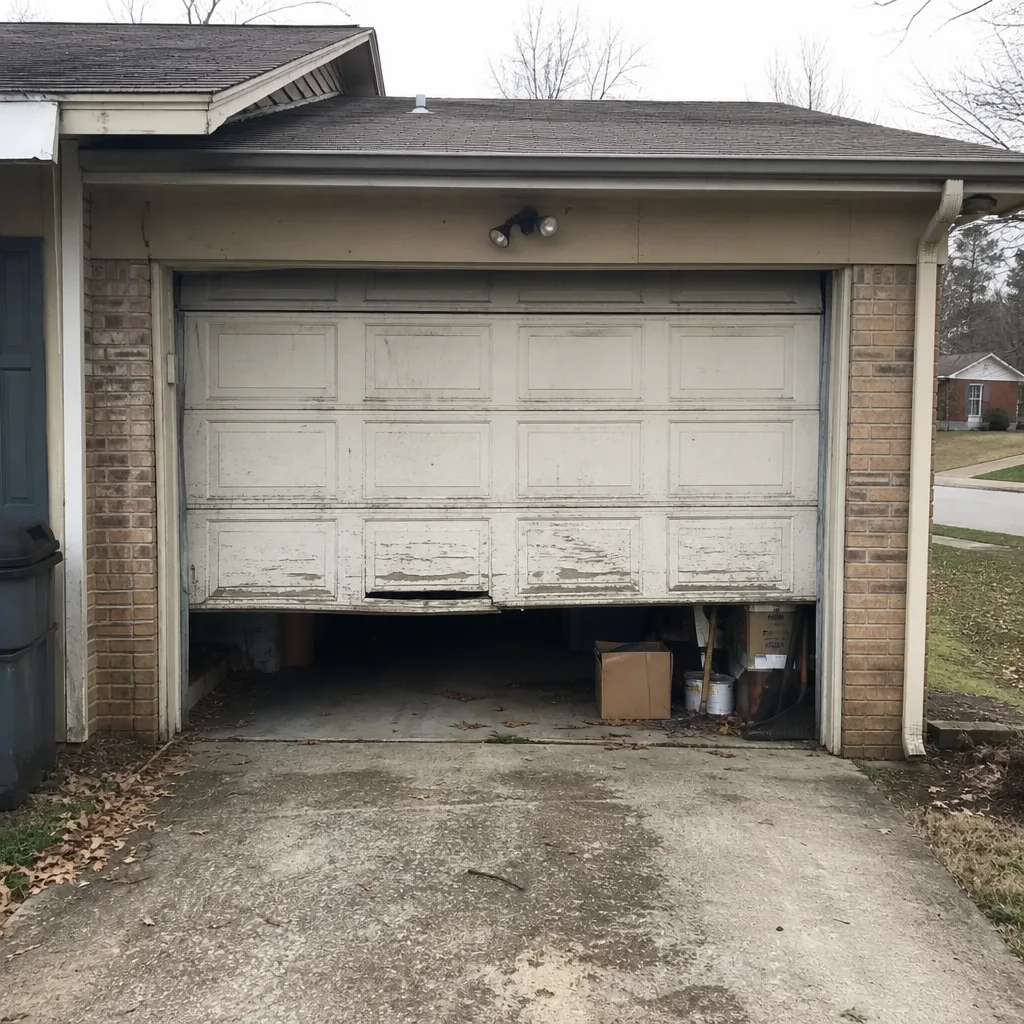 Before
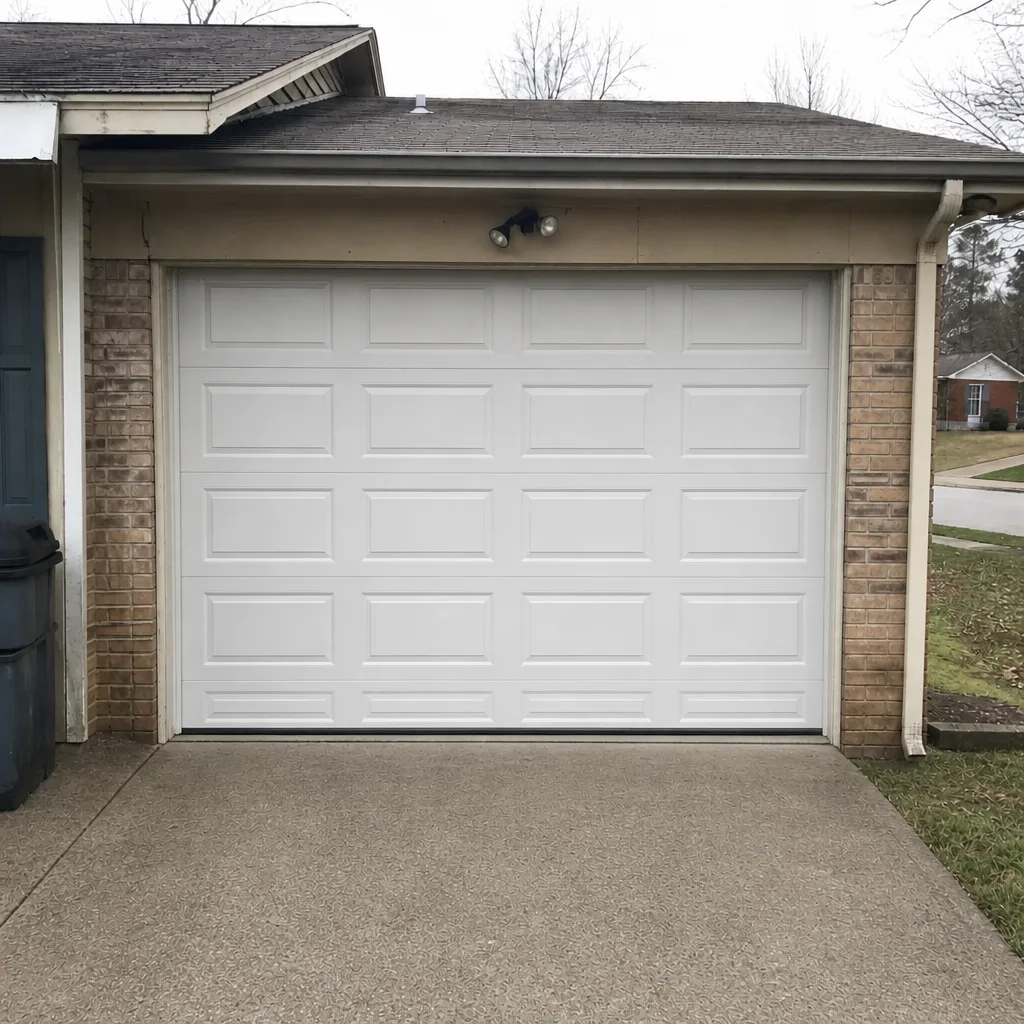 After
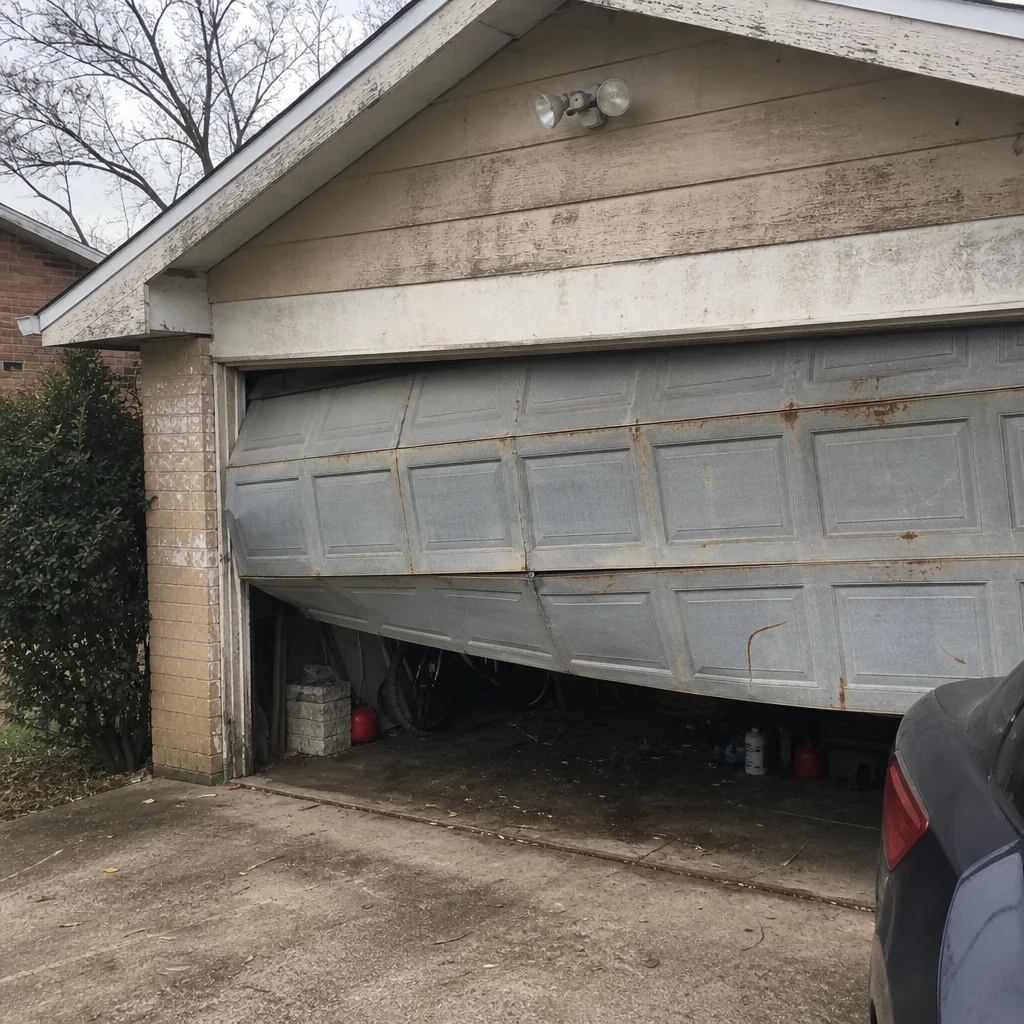 Before
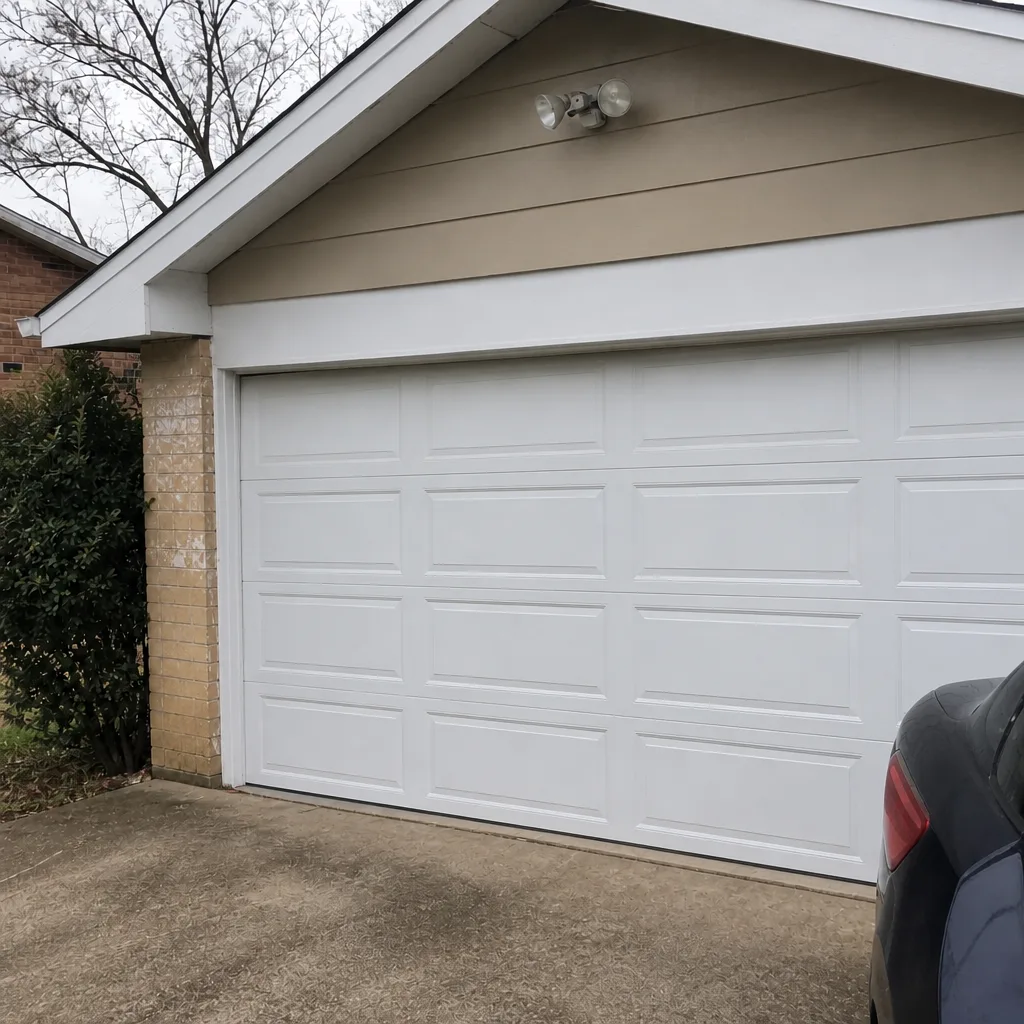 After
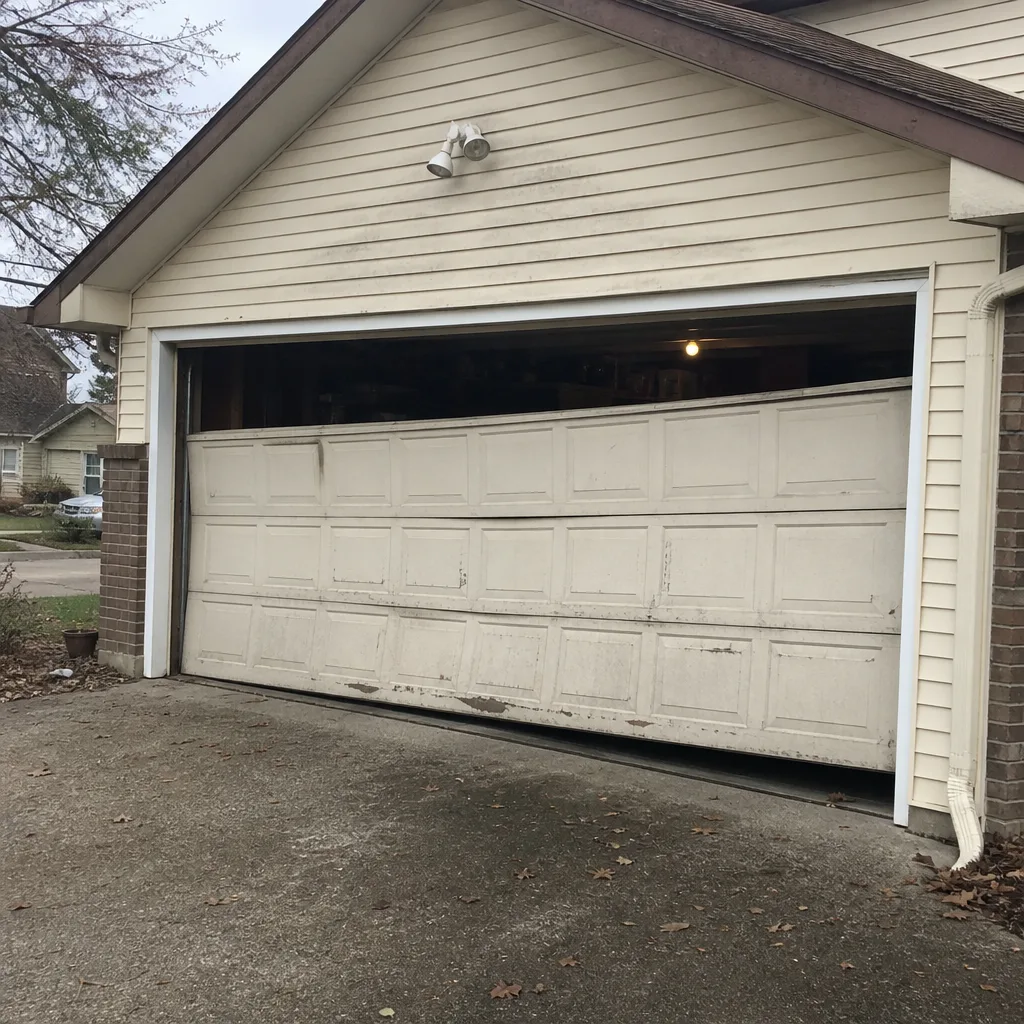 Before
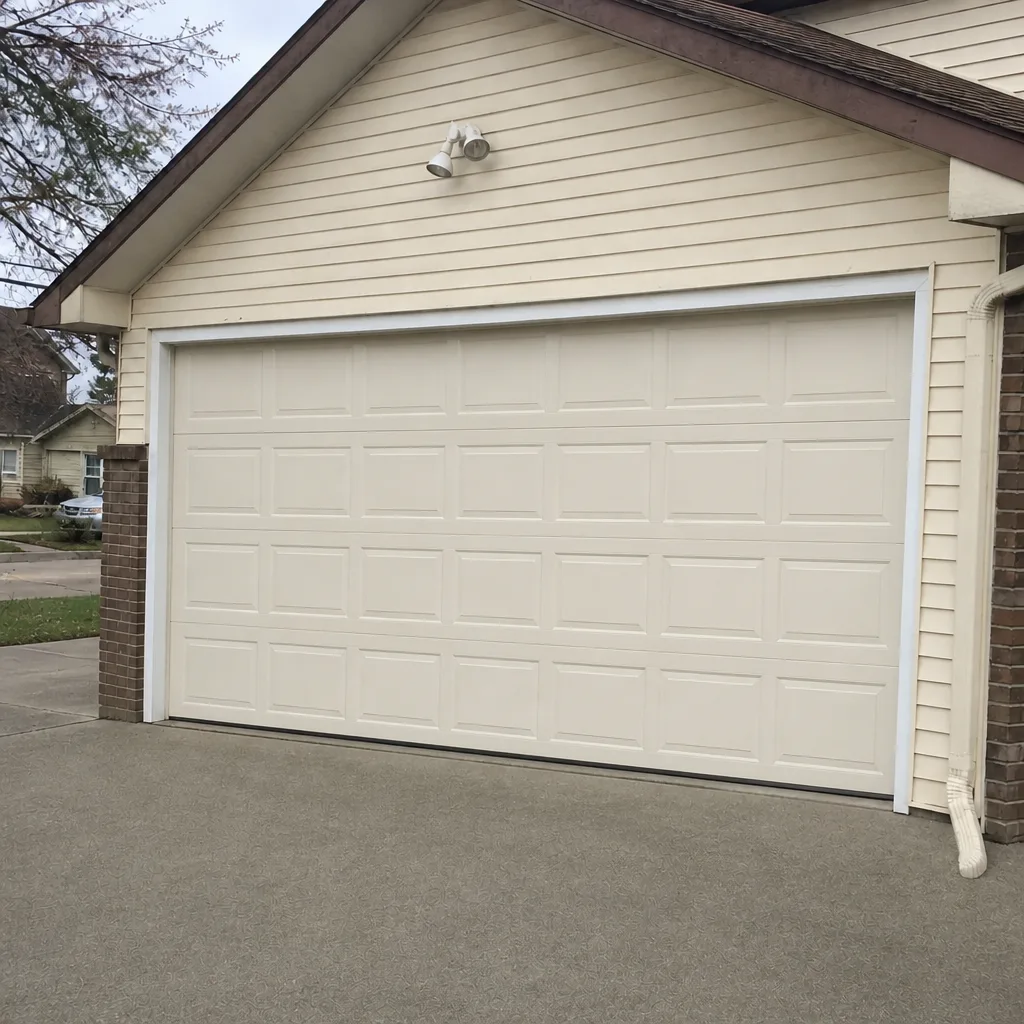 After
When to Call a Professional
Some garage door problems need a trained eye, and some are genuinely dangerous to touch. Call a professional if the door won’t open or close smoothly, if it reverses for no clear reason, if you hear grinding or popping from the opener, if a spring has broken, or if the door is visibly out of balance. Also call if the door has come off its track or if you’re replacing a door on an attached garage where fire separation applies. Springs and cables are the one part of the system you should never adjust yourself. Starling Garage Door Repair offers free estimates in Nashville. Call (855) 916-8763. We answer 24/7. Fast dispatch from 7am to 7pm, Sunday through Friday.
Frequently Asked Questions
Spring replacement typically runs $180 to $340 for one spring, and a matched pair is usually replaced together, so a pair costs about twice that. The written estimate sets the final price. Call (855) 916-8763 for an exact quote; estimates are free.
We handle many repairs the same day, and fast dispatch runs from 7am to 7pm, Sunday through Friday. Call (855) 916-8763 and we’ll book you into the next opening. Replacement and installation work is measured and scheduled rather than done same-day.
No. The price is quoted and agreed before any work starts, and the written estimate is the price. If we find something additional during the job, we explain it and get your approval before proceeding. Call (855) 916-8763 for a free estimate.
Yes. We work on LiftMaster, Chamberlain, Genie, and Craftsman openers, along with doors from Clopay, Amarr, Wayne Dalton, and Raynor. If you’re unsure about your brand, call (855) 916-8763 and we’ll tell you.
Many post-war and 1960s Nashville garages have less than 12 inches of headroom above the door, which a standard-lift track needs. High-lift raises the door higher before it turns back, so it clears the ceiling. We measure the actual clearance before recommending a configuration. Call (855) 916-8763 to schedule a measurement.
Yes, the technicians we connect you with are licensed and insured. We’re a garage door specialist, not a general handyman, and we stay inside that scope. Call (855) 916-8763 with any questions about credentials before booking.
The Bottom Line
The right garage door for your Nashville home starts with the house, not the catalog. Match the door and track configuration to your home’s era and clearance, choose insulation for the humid summers and hard freezes, and check fire-separation requirements before you buy on an attached garage. When something fails, diagnose before replacing, and always get the price in writing before work starts. Springs and cables belong to a trained professional, and routine lubrication and balance checks belong to you. For a free estimate in Nashville, call (855) 916-8763. We answer 24/7. Fast dispatch from 7am to 7pm, Sunday through Friday.
Written by the team at Starling Garage Door Repair.